 EN
EN
Liquid Cooling Infrastructure for an AI Data Center
Connecting Monitoring and Maintaining Cooling Loops Liquid Cooling Infrastructure for an AI Data Center
Industry: AI Computing Centers / High-Performance Computing / Data Centers
Core Products: Liquid Cooling Equipment, Distribution Manifolds, Quick Disconnects, Hoses, and Instrumentation
Project Highlights: Interface Compatibility · Cooling Loop Monitoring · Maintenance Accessibility
Customer Background
A data center operator plans to introduce cold-plate liquid cooling in a new computing area. The project requires coordination between coolant distribution equipment, rack-side piping, and server-side connections, with clearly defined interfaces for commissioning, operational monitoring, and future maintenance.
The customer’s priorities include connection compatibility, installation clearances, and access to operating data such as flow rate, temperature, and pressure.
Challenges and Pain Points
1. Equipment differs in interface type, connection size, and available installation space.
2. Compatibility must be verified among piping materials, seals, and coolant.
3. Limited rack space requires hose routing that accommodates bend radius requirements, connection access, and equipment withdrawal.
4. Commissioning and operation require visibility into key parameters; pipe connections alone do not provide the information needed for ongoing maintenance.
GLGW Proposed Solution
Verify Equipment and Interfaces at System Connection Points
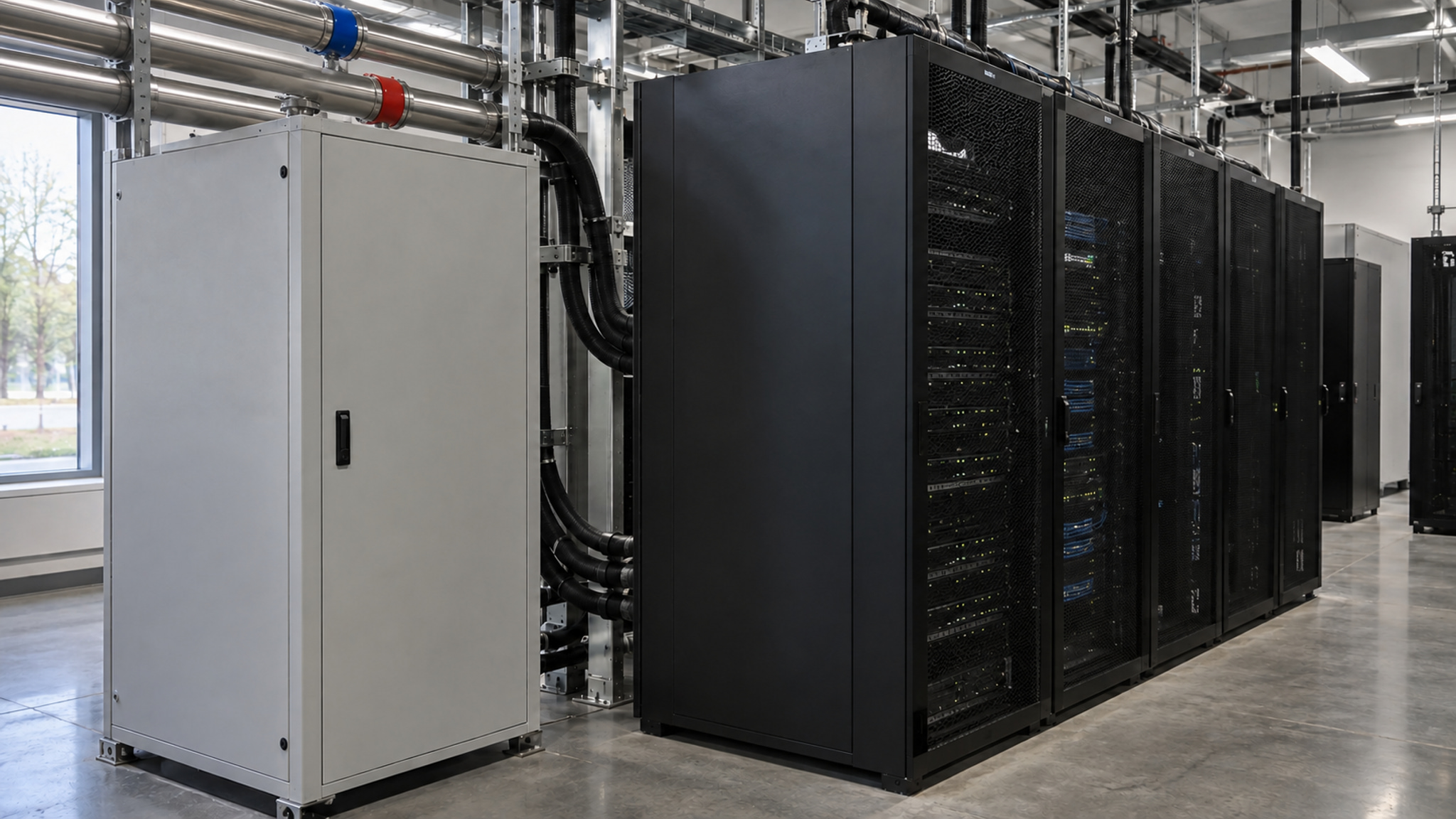
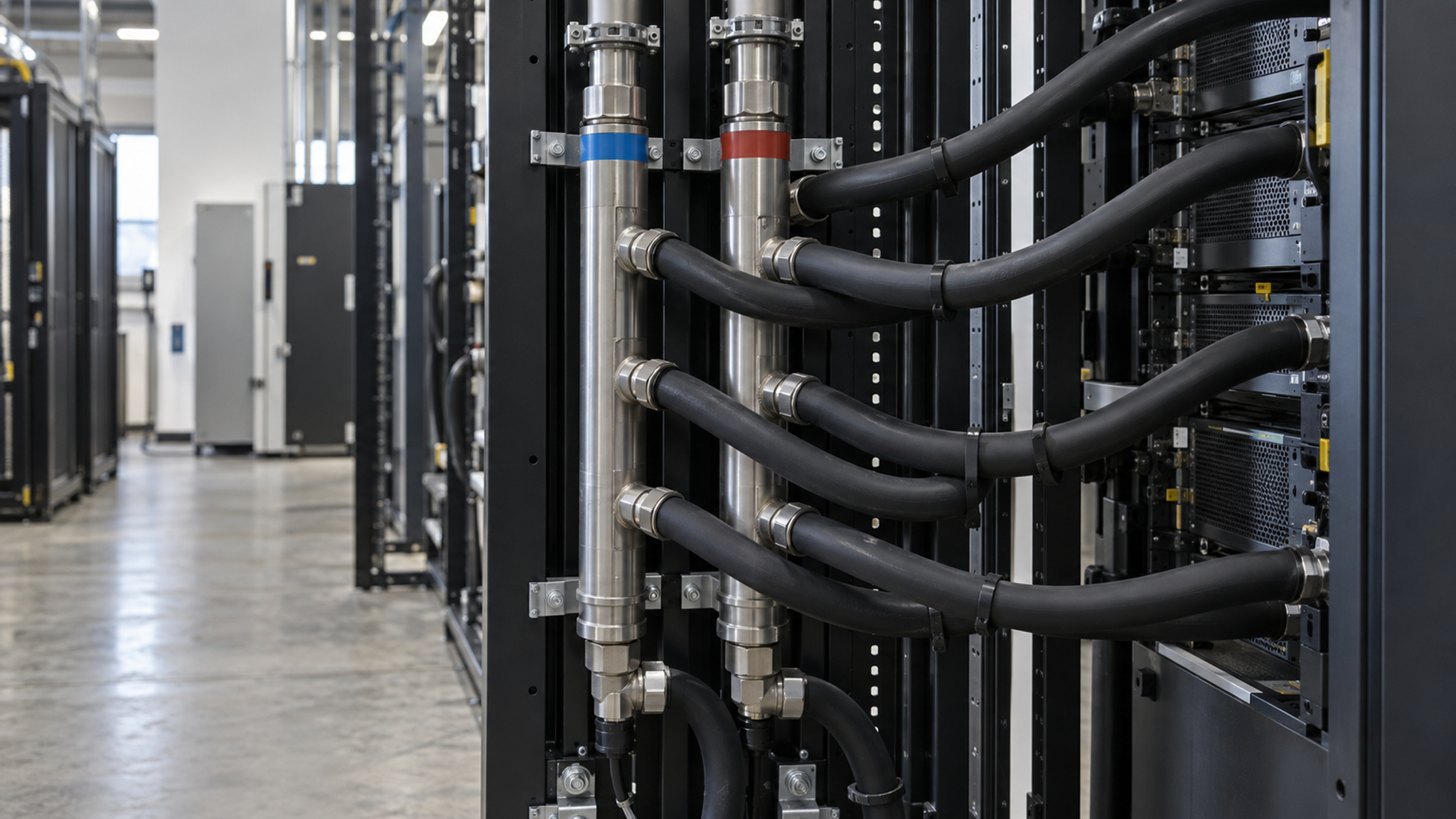
Verify the connection requirements between coolant distribution units (CDUs), other liquid cooling equipment, and rack-side loops. Select compatible distribution manifolds, hoses, quick disconnects, and mounting accessories based on design temperature, pressure, flow rate, coolant, and material compatibility.
Design Clearly Identified and Accessible Cooling Loops
Clearly identify supply and return lines, branch connections, and hose routes, while allowing space for connection tasks and server maintenance. Incorporate isolation, venting, and draining components as required by the project so that maintenance procedures can be carried out effectively.
Specify Instrumentation to Support Commissioning
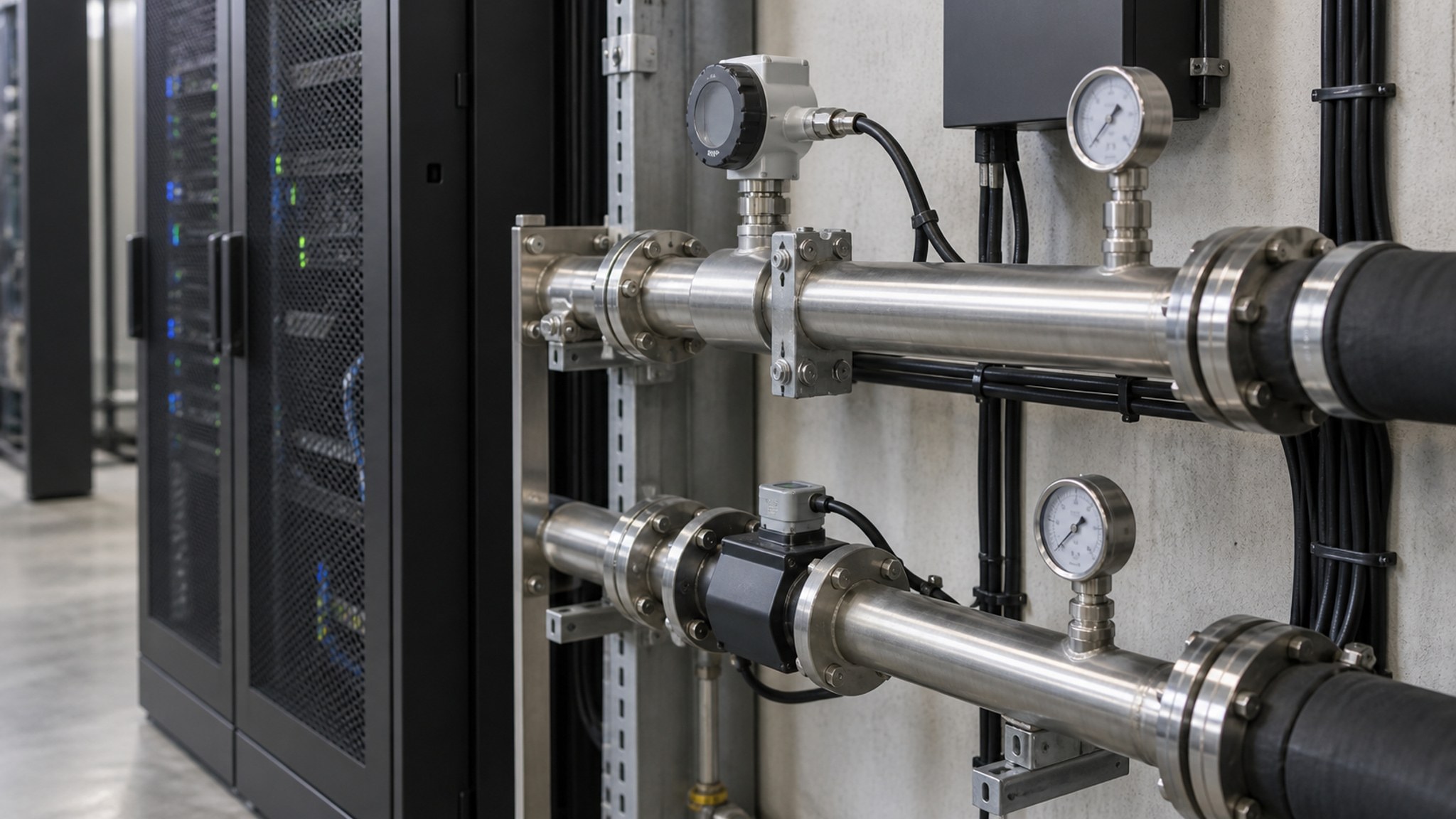
Install temperature, pressure, and flow instrumentation at the locations defined in the system design. Where remote data collection is required, confirm sensor outputs, communication methods, and monitoring system interfaces. Coordinate with the integrator on connection inspections, leak testing, cleanliness checks, and cooling loop commissioning.
Key Products and Components
Depending on the agreed scope of supply, select CDUs, distribution manifolds, liquid cooling quick disconnects, hose assemblies, valves, temperature instruments, pressure instruments, flow instruments, and leak detection components.
Expected Results and Value
Clearly defined supply and return routes and connection arrangements provide a foundation for installation, commissioning, operational monitoring, and equipment maintenance. Coordinated component selection and interface verification can help reduce on-site adaptation and rework.
Project Data to Add: Number of racks served, measured flow rates and differential pressure, supply and return temperatures, leak test results, and maintenance task duration. Any change in energy efficiency should be assessed using measured system data.