Vertical Cable Tray: Structured Routing for Data Centers & Telecom

All Categories
Efficient Vertical Cable Routing

Efficient Vertical Cable Routing

A vertical cable tray provides a structured pathway for routing cables vertically between equipment levels, racks, cabinets, floors, and other connection points. It helps keep power cables, data cables, fiber optic cables, and other wiring organized while reducing uncontrolled cable bundles. Vertical cable trays can be used in data centers, telecom rooms, electrical rooms, industrial facilities, and structured cabling installations where cables need to move efficiently through vertical spaces. The tray configuration can be selected according to cable volume, tray width, mounting method, bend requirements, and installation environment. Proper routing can simplify cable identification and maintenance while supporting cleaner infrastructure layouts. For expanding facilities, additional tray capacity can also provide space for future cables without requiring major changes to the existing routing structure.
Get A Quote

Case Study

Data Center Vertical Routing

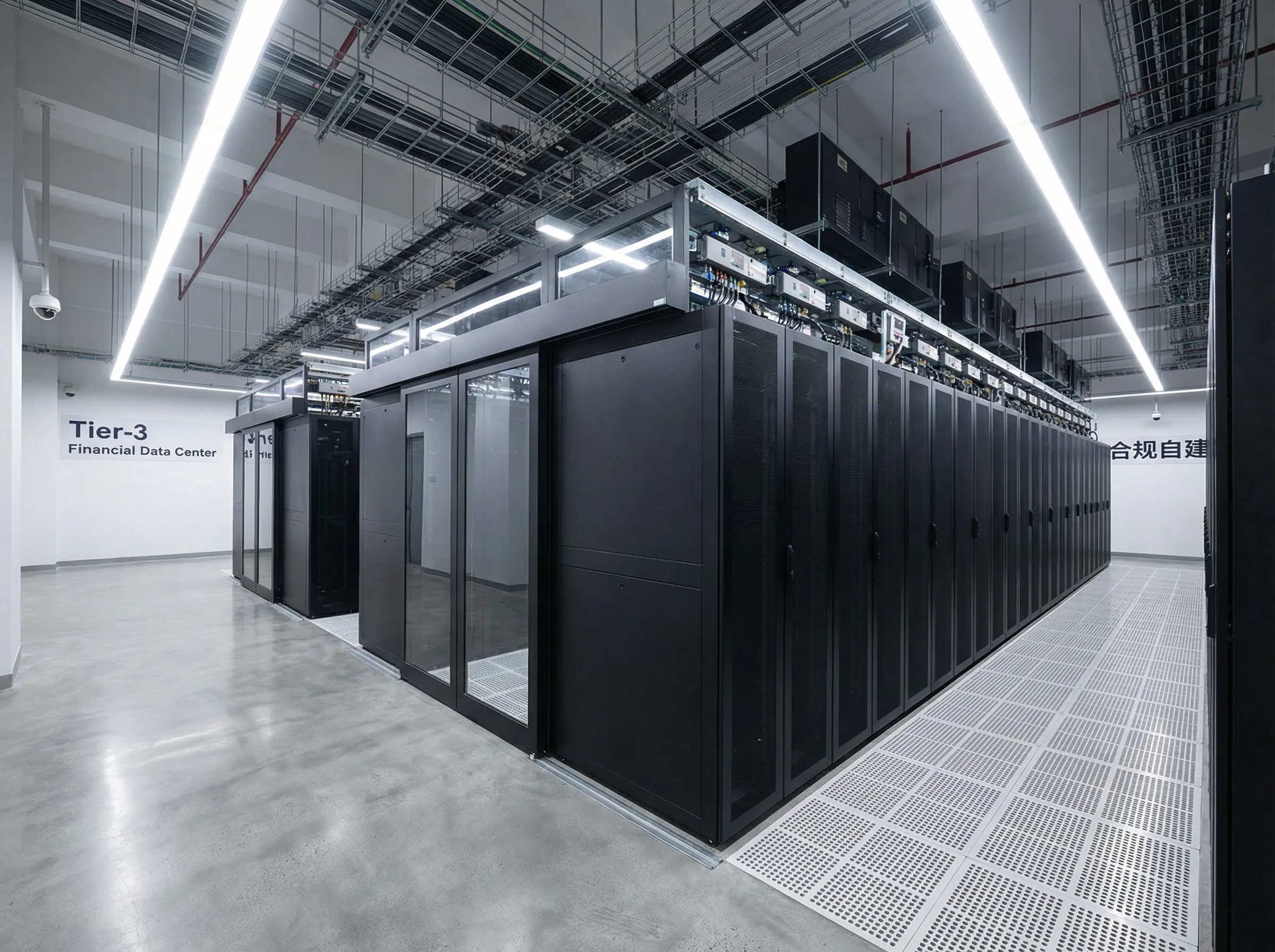
A data center required a dedicated pathway for routing network and power cables between multiple rack levels and overhead cable routes. Vertical cable trays were installed at selected cabinet and equipment areas to guide cables through controlled paths. The installation team considered cable quantity, tray width, mounting positions, and required separation between different cable types. The organized routing reduced loose cable bundles around equipment and made cable paths easier to identify during maintenance. Additional space was reserved in selected tray sections for future connections. This approach is suitable for data centers where high cable density requires structured vertical routing between racks, cabinets, and distribution areas.

Telecom Room Installation

A telecom facility needed to route fiber and copper cables between different cabinet sections while maintaining a clear working environment. Vertical cable trays were installed along designated pathways to guide cables from upper distribution points toward network cabinets and patching areas. The project team planned tray positions according to cabinet locations, cable volume, and access requirements. Structured routing helped reduce cable crossings and made individual cable groups easier to follow during installation and service work. The tray system can be adapted to different facility layouts and cable loads, making it suitable for telecom rooms, central offices, and communication infrastructure requiring controlled vertical cable distribution.

Industrial Cable Distribution

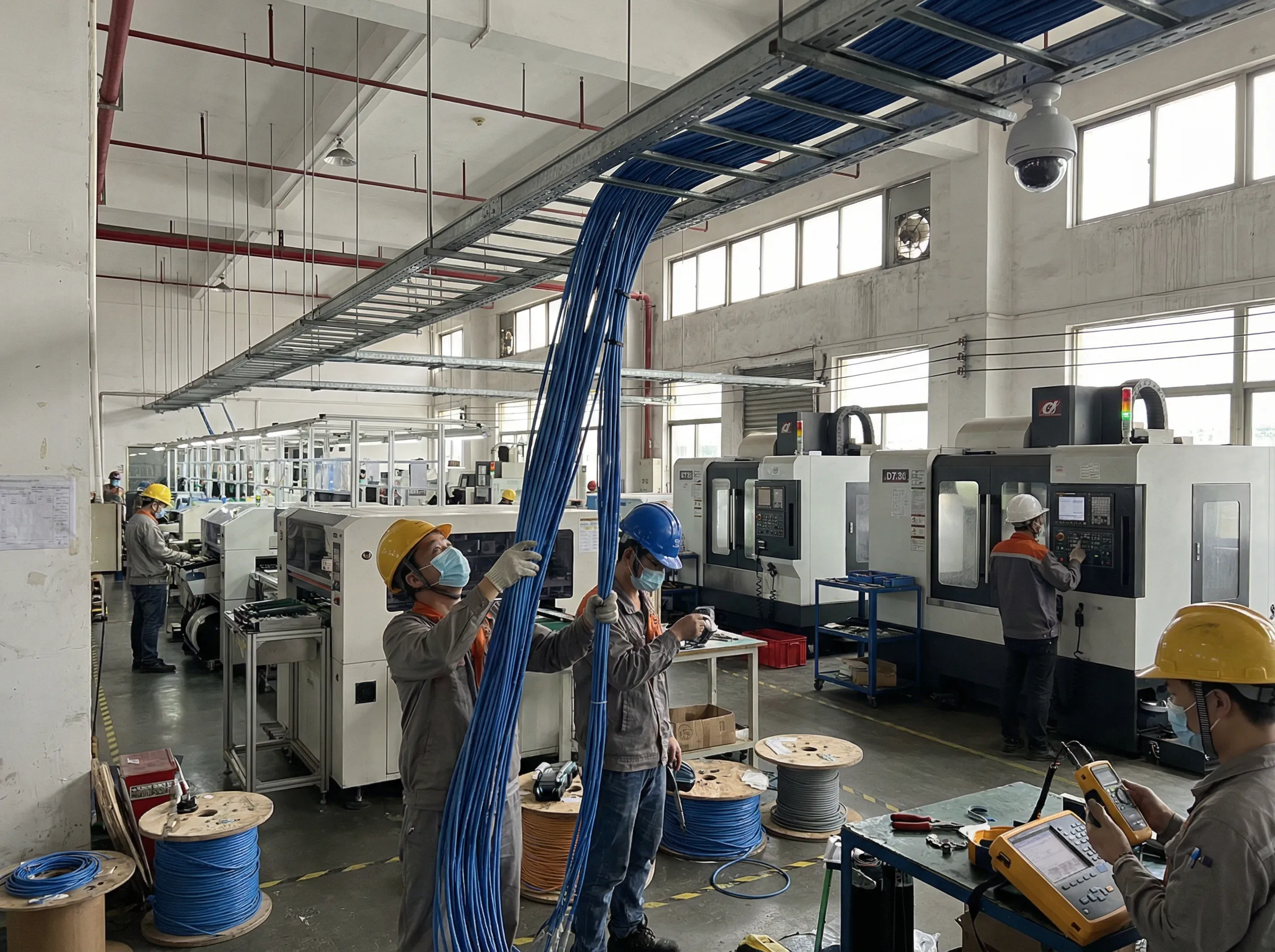
An industrial facility required organized vertical routing for communication and electrical cables connecting equipment installed at different elevations. Vertical cable trays provided defined paths for moving cable groups between distribution areas and machinery zones. The installation plan considered cable type, expected load, tray dimensions, mounting structure, and maintenance access. Separating cables into planned routes helped reduce uncontrolled bundles and created clearer access for inspection and future modifications. The solution is suitable for manufacturing facilities, equipment rooms, utility infrastructure, and other industrial environments where multiple cables need to travel vertically between floors or equipment levels while maintaining an organized and serviceable installation.

Related products

A vertical cable tray is designed to provide a controlled pathway for cables that need to travel vertically through a facility, rack area, cabinet zone, or equipment room. It can be used to route fiber optic cables, data cables, power cables, and other wiring depending on the project requirements. The tray creates a defined support structure that helps prevent cables from forming loose bundles and makes routing paths easier to inspect and maintain. Common applications include data centers, telecom rooms, electrical rooms, industrial facilities, utility infrastructure, and structured cabling systems. When selecting a vertical cable tray, project teams should consider cable quantity, tray width, load requirements, mounting method, available vertical space, cable separation, and future expansion. A properly planned tray system can simplify installation and provide a clear route for additional cables as infrastructure grows. It can also help technicians locate cable groups more efficiently when maintenance or network modifications are required.

Frequently Asked Questions

What is a vertical cable tray used for?

A vertical cable tray provides a supported pathway for cables traveling vertically between floors, racks, cabinets, equipment levels, or distribution areas. It helps organize cable groups and creates a defined route for installation, inspection, maintenance, and future expansion.
Depending on the system design, vertical cable trays can support fiber optic cables, data cables, control cables, and power cables. Cable separation requirements should be considered when different cable categories share the same installation area.
They are commonly used in data centers, telecom rooms, electrical rooms, industrial facilities, utility sites, and structured cabling environments. They are particularly useful where cables must move between different elevations or equipment levels.
Consider cable volume, tray width, load requirements, mounting method, available vertical space, cable separation, environmental conditions, and future expansion. The selected tray should provide sufficient support and routing capacity for the intended installation.
Yes. A tray system can be planned with additional routing capacity for future cables. Leaving suitable working space can make later installations easier and reduce the need to replace or significantly modify the existing cable routing infrastructure.

Related article

Fiber Optic Patch Panel: High-Density Modular Rack-Mount Solution for Reliable Network Management

21

May

Fiber Optic Patch Panel: High-Density Modular Rack-Mount Solution for Reliable Network Management

Discover how a high-density fiber optic patch panel improves cable organization, network reliability, scalability, and maintenance for data centers, telecom, FTTX, and enterprise networks.
View More
Bulk cable deployment for campus network construction.

13

Aug

Bulk cable deployment for campus network construction.

Deploying bulk fiber optic and structured copper cabling across a university campus, corporate park, or large institutional facility is vastly different from installing localized runs in a single server room or small office. Campus environments req...
View More
High durability patch cord for industrial network systems.

07

Sep

High durability patch cord for industrial network systems.

Industrial Patch Cord Explained: Construction, Durability, and Selection Guide for Harsh Environments What Is an Industrial Patch Cord and Why Is It Different from Standard Network Cables? An industrial patch cord is a specially designed Ethernet c...
View More
LAN Cable Quality Standards for Enterprise Local Area Networks.

17

Sep

LAN Cable Quality Standards for Enterprise Local Area Networks.

Enterprise LAN Cable Selection Guide: Categories, Shielding, Standards, and Performance Why Choosing the Right LAN Cable Matters for Enterprise Networks A reliable LAN cable is the foundation of modern enterprise network infrastructure. Although wi...
View More

Customer Testimonials

Mark Evans

“The vertical cable tray gave us a clear route between the equipment levels and distribution area. Cable groups were easier to identify, and maintenance access improved after installation.”

Paul Bennett

“We used the trays for a telecom room upgrade and found the vertical routing practical for both fiber and data cables. The installation also left capacity for additional connections.”

Get a Free Quote

Our representative will contact you soon.
Email
Mobile/WhatsApp
Name
Company Name
Message
0/1000
Structured Cable Support

Structured Cable Support

A vertical cable tray provides a defined support path for cables moving between different elevations or equipment areas. Instead of allowing cable groups to hang loosely or follow inconsistent routes, the tray creates a structured pathway that can be planned around the facility layout. Depending on the installation, it can support fiber optic, data, control, or power cables while maintaining appropriate separation requirements. Tray dimensions can be selected according to cable volume and expected growth. This makes vertical trays useful in data centers, telecom rooms, industrial facilities, and utility infrastructure. A clearly defined cable route can also make inspection and maintenance more manageable for technicians working around dense infrastructure.
Flexible Installation Options

Flexible Installation Options

Vertical cable trays can be integrated into different infrastructure layouts depending on available wall, rack, cabinet, floor, or equipment space. The mounting arrangement can be planned according to cable direction, tray dimensions, support requirements, and maintenance access. This flexibility allows the same basic routing concept to be applied across data centers, telecom rooms, electrical facilities, and industrial environments. Project teams can also consider cable grouping and separation during the design stage to maintain clearer routes for different applications. Proper installation helps reduce unnecessary cable crossings and provides technicians with a more predictable pathway when adding, inspecting, or replacing cables throughout the facility.
Scalable Cable Infrastructure

Scalable Cable Infrastructure

Cable requirements can increase as new equipment, network links, power systems, and communication devices are introduced. A vertical cable tray can be planned with additional routing capacity to accommodate future connections without immediately requiring a new cable pathway. Teams can evaluate current cable volume, expected expansion, tray width, available vertical space, and installation access during the initial design. This approach is useful for facilities that are developed in phases or upgraded over time. Maintaining spare routing capacity also helps technicians add new cables more systematically instead of creating uncontrolled bundles. A scalable tray layout supports cleaner infrastructure and more manageable maintenance as the cable network continues to develop.

Get a Free Quote

Our representative will contact you soon.
Email
Mobile/WhatsApp
Name
Company Name
Message
0/1000