Liquid Cooling Manifold: Optimize AI & HPC Thermal Management

All Categories
Why Use a Liquid Cooling Manifold?

Why Use a Liquid Cooling Manifold?

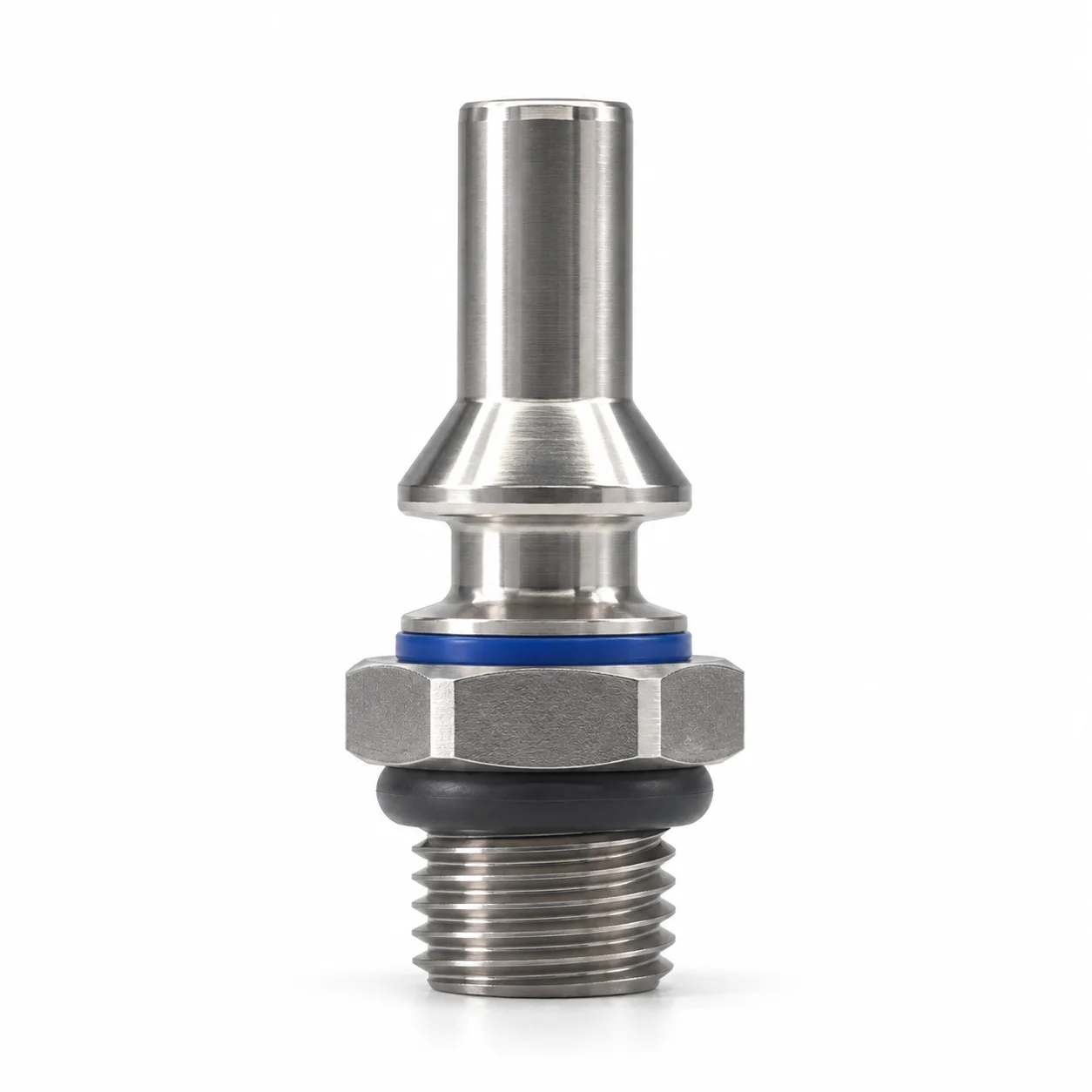
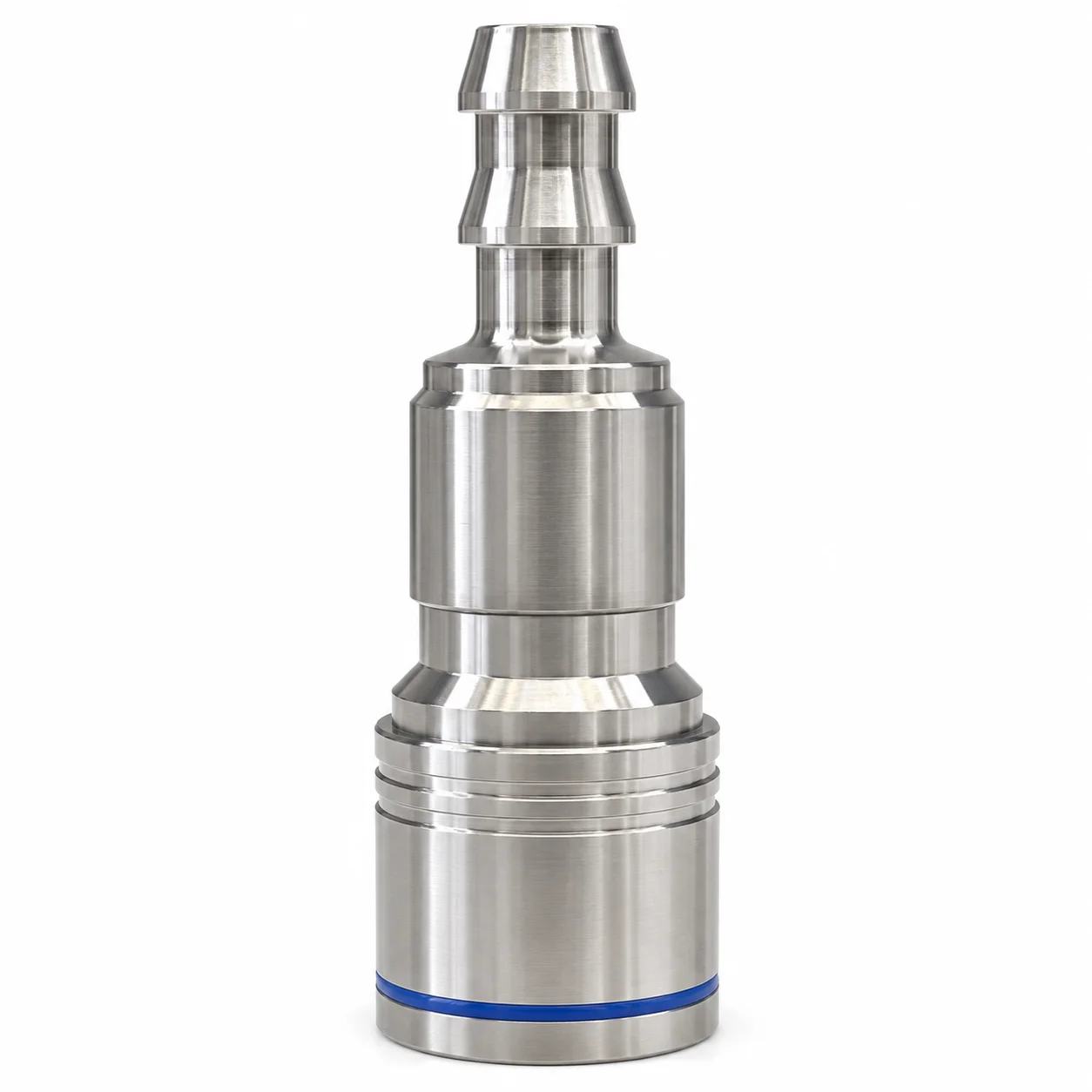
A liquid cooling manifold provides a centralized interface for distributing coolant to multiple cooling branches and collecting return fluid within a liquid thermal management system. It can connect coolant distribution units, pumps, hoses, cold plates, GPU cooling blocks, heat exchangers, and other components while keeping supply and return paths organized. Depending on application requirements, the manifold can be configured with multiple branch ports, isolation valves, quick disconnect couplings, sensors, and compatible fittings. Key considerations include coolant flow rate, operating pressure, temperature range, pressure drop, material compatibility, port size, and branch quantity. This architecture is suitable for AI servers, HPC systems, high-density data centers, industrial electronics, and other applications where multiple cooling circuits must be managed efficiently and with room for future expansion.
Get A Quote

Case Study

AI GPU Liquid Cooling

A high-density AI server uses several GPU cold plates to remove heat directly from accelerator modules. A liquid cooling manifold can distribute coolant from the CDU or primary cooling loop to each GPU branch and collect the warmed return fluid. Multiple ports can be arranged according to the server architecture, while isolation valves can help separate individual circuits during maintenance. Quick disconnect couplings may simplify server replacement, and monitoring points can provide temperature or pressure information when required. The manifold creates a structured distribution layer between centralized cooling infrastructure and chip-level components. This configuration is suitable for AI training and inference servers where several GPUs operate simultaneously and require organized liquid cooling connections within limited rack space.

HPC Server Cooling

An HPC cluster contains multiple processors and accelerators operating under sustained computational workloads. A liquid cooling manifold can provide a centralized distribution point between the rack cooling loop and individual server cooling circuits. Supply and return headers can serve multiple cold plates, while branch ports are configured according to required flow rates and connection specifications. Valves may allow technicians to isolate selected circuits for maintenance, and sensors can be incorporated for operating-condition monitoring. By consolidating multiple cooling connections, the manifold helps reduce complex hose routing across the rack. It is suitable for scientific computing, simulation, engineering applications, research clusters, and other HPC environments where concentrated thermal loads require controlled liquid cooling.

Data Center Liquid Cooling Deployment

A data center deploying liquid-cooled servers needs an organized interface between centralized cooling infrastructure and rack-level IT equipment. A liquid cooling manifold can distribute coolant from a CDU, pump, or facility-side loop to multiple server branches while collecting return fluid through a separate circuit. Port locations can be adapted to rack layouts, and additional connections may be included when future expansion is expected. Quick disconnects can support equipment replacement, while isolation valves can simplify service activities. The manifold can connect with CPU cold plates, GPU cold plates, hoses, and heat exchangers as part of a complete cooling architecture. This makes it suitable for phased deployment of AI, HPC, and other high-density computing systems.

Related products

A liquid cooling manifold is a distribution component designed to manage coolant flow between a primary cooling source and multiple thermal management branches. In data center and server applications, it can connect coolant distribution units, pumps, hoses, quick disconnect couplings, CPU cold plates, GPU cold plates, and heat exchangers. The manifold can include separate supply and return headers, multiple branch outlets, isolation valves, monitoring ports, and customized fittings according to system requirements. Important parameters include branch quantity, total coolant flow, operating pressure, temperature range, pressure drop, port dimensions, material compatibility, and installation space. Proper flow balancing is important when several cooling devices operate in parallel. A well-configured manifold can simplify coolant routing, improve accessibility for maintenance, and provide a scalable connection point for liquid cooling infrastructure. It can support AI servers, HPC clusters, cloud computing, telecom equipment, and high-density data center racks.

Frequently Asked Questions

What is a liquid cooling manifold?

A liquid cooling manifold distributes coolant from a primary cooling loop to multiple cooling branches and collects the return fluid. It provides a centralized connection point for cold plates, cooling blocks, servers, or other thermal components. The manifold can be configured according to the number of branches, flow requirements, connection types, pressure, and temperature conditions.
Yes. A liquid cooling manifold can be configured with multiple supply and return branches for GPU cold plates or cooling blocks. The design should account for the number of GPUs, required coolant flow, pressure drop, operating temperature, and connection specifications. Proper branch balancing helps provide suitable coolant distribution across parallel GPU cooling circuits.
Common connections include coolant distribution units, pumps, hoses, quick disconnect couplings, cold plates, GPU cooling blocks, heat exchangers, valves, and monitoring sensors. The exact configuration depends on the cooling architecture. Port size, fitting type, flow requirements, pressure rating, and coolant compatibility should be matched throughout the complete liquid cooling loop.
Liquid cooling manifolds are used in AI servers, HPC clusters, data centers, industrial electronics, power electronics, and other high-heat-load applications. They are particularly useful when multiple cooling branches need to share a centralized liquid loop. The manifold helps organize supply and return connections while supporting different rack and equipment configurations.
Selection should consider the number of branches, total coolant flow, branch flow requirements, operating pressure, temperature range, pressure drop, port size, coolant type, material compatibility, mounting space, and maintenance access. The thermal load of connected CPUs, GPUs, or other devices should also be evaluated to determine the appropriate distribution capacity.

Related article

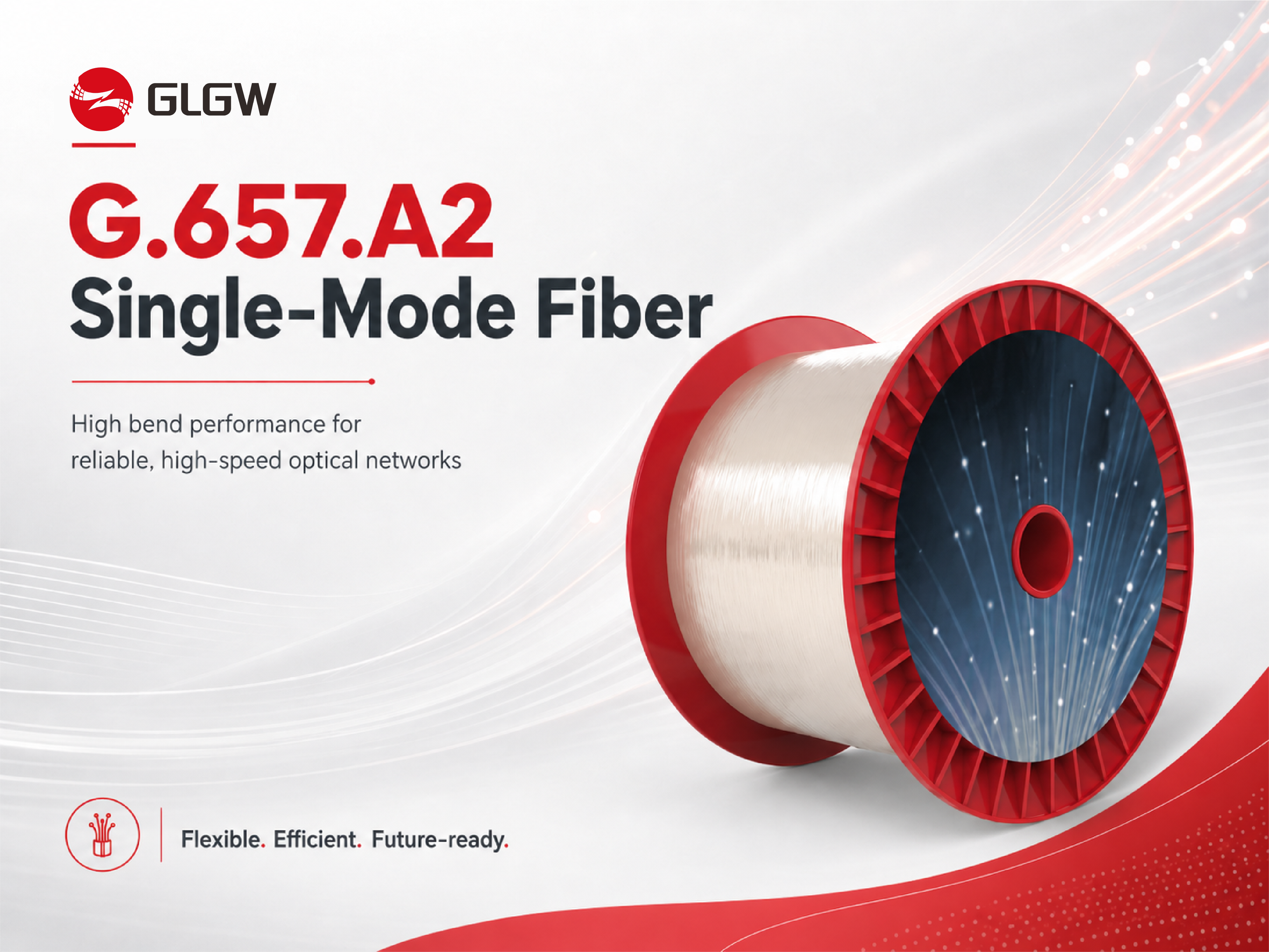
G.657.A2 Single-Mode Fiber for Reliable High-Speed Optical Networks

09

May

G.657.A2 Single-Mode Fiber for Reliable High-Speed Optical Networks

G.657.A2 single-mode fiber offers excellent bend performance, stable transmission, and flexible installation for FTTH, indoor cabling, access networks, and high-speed optical communication systems.
View More
Connecting the World, Powering the Future

21

May

Connecting the World, Powering the Future

GLGW delivers high-quality cable solutions that keep the world connected. Built on trust and driven by innovation, our products provide reliable, efficient connectivity for industries, businesses, and communities. Experience the power of seamless connections and discover how GLGW is shaping a connected tomorrow.
View More
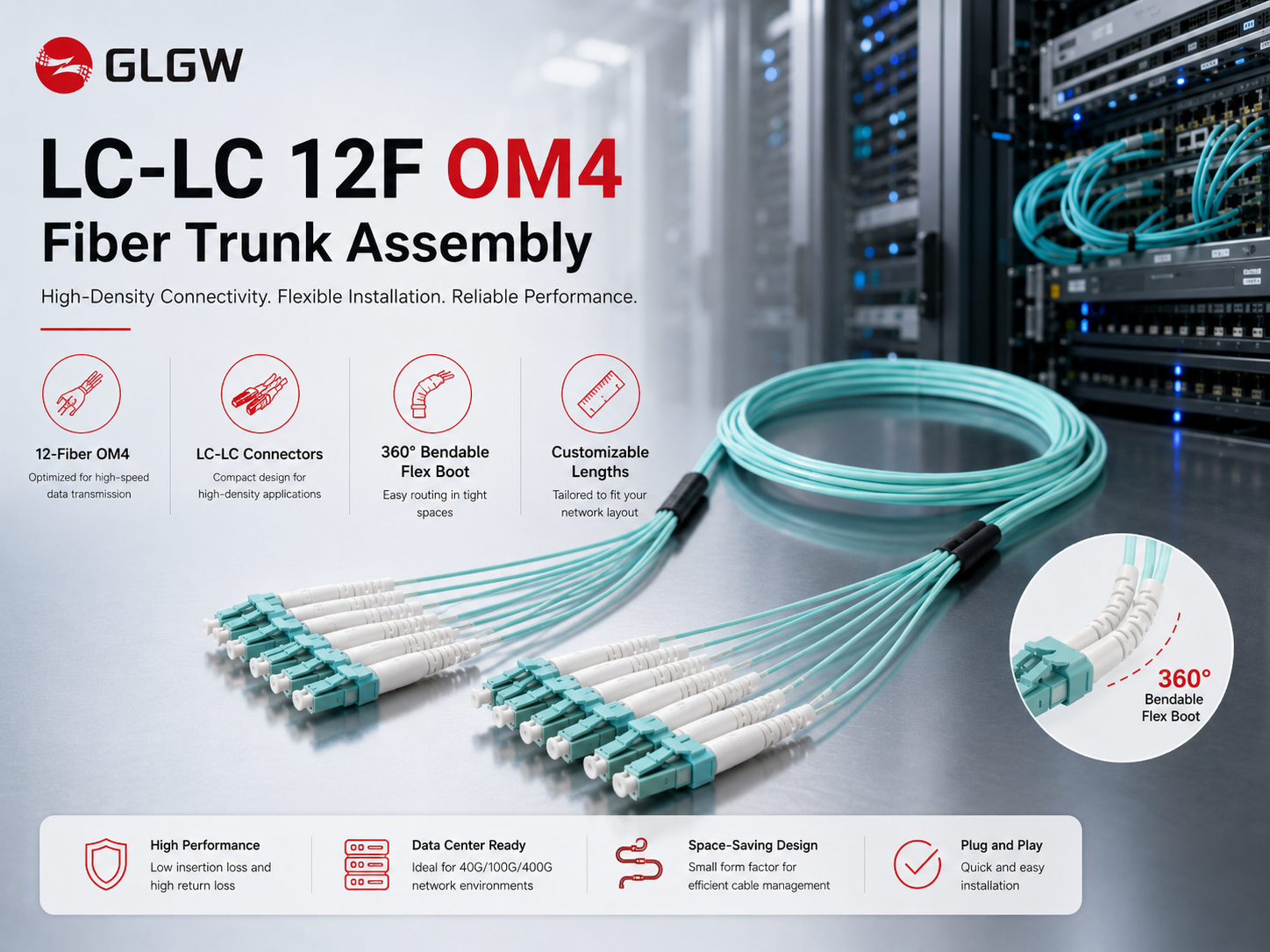
LC-LC 12F OM4 Fiber Trunk Assembly for High-Density Data Centers

21

May

LC-LC 12F OM4 Fiber Trunk Assembly for High-Density Data Centers

GLGW LC-LC 12F OM4 Fiber Trunk Assembly is designed for high-density data center connectivity, offering reliable performance, flexible installation, and clean cable management. With 12-fiber OM4 multimode fiber, LC-LC connectors, customizable lengths, and a 360° bendable flex boot, it provides an efficient solution for server racks, network cabinets, structured cabling systems, and modern data center infrastructure.
View More
High-Flex Ethernet Patch Cable for Data Center Connections.

18

Aug

High-Flex Ethernet Patch Cable for Data Center Connections.

High-density data center environments present severe mechanical and spatial challenges for network cabling. As rack densities increase with switch port counts climbing to 48 or 64 ports per rack unit (RU), traditional thick, rigid copper patch cord...
View More

Customer Testimonials

Kevin Morgan

“The manifold simplified coolant routing across our GPU servers. Supply and return connections were much easier to organize, and individual branches remained accessible for maintenance.”

David Carter

“We connected the manifold between our CDU and multiple server cooling circuits. The configurable port arrangement worked well with our rack layout and expansion plans.”

Get a Free Quote

Our representative will contact you soon.
Email
Mobile/WhatsApp
Name
Company Name
Message
0/1000
Efficient Supply and Return Management

Efficient Supply and Return Management

A liquid cooling manifold organizes the movement of coolant between a central cooling source and multiple parallel cooling circuits. Supply headers deliver liquid to cold plates, GPU cooling blocks, or server-level cooling branches, while return headers collect warmed fluid for recirculation or heat exchange. Port quantity and arrangement can be configured around the equipment layout, helping reduce complicated hose routing. Isolation valves may provide control over individual branches, while quick disconnect couplings can simplify equipment service or replacement. Flow balancing is an important design consideration when multiple devices share the same manifold. This organized architecture can make liquid cooling systems easier to install, inspect, and maintain while supporting AI servers, HPC equipment, and high-density data center infrastructure.
Direct-to-Chip Cooling Integration

Direct-to-Chip Cooling Integration

Liquid cooling manifolds can provide a practical connection between rack-level cooling infrastructure and direct-to-chip thermal components. Depending on the system, the manifold may connect to CPU cold plates, GPU cold plates, pumps, CDUs, hoses, quick disconnects, and heat exchangers. Multiple branches allow several processors or servers to share a centralized coolant distribution point. Connection specifications should be selected according to flow rate, pressure, temperature, tubing dimensions, fitting type, and coolant compatibility. Optional valves and sensors can provide additional branch control and operating-condition monitoring. This flexibility makes the manifold suitable for direct liquid cooling architectures used in AI training systems, HPC clusters, cloud computing platforms, and other high-density applications requiring structured coolant distribution.
Scalable Liquid Cooling Infrastructure

Scalable Liquid Cooling Infrastructure

As server power density increases, liquid cooling infrastructure may need to support more cooling branches without creating unnecessary plumbing complexity. A configurable manifold provides multiple connection points that can be arranged according to current server and rack requirements. Additional branches can potentially be incorporated when future expansion is supported by the system architecture. Isolation valves can help separate individual circuits during service, while quick disconnects may simplify equipment replacement. The manifold can operate alongside CDUs, pumps, heat exchangers, hoses, and cold plates as part of a complete thermal management loop. This scalable distribution approach is suitable for AI computing, HPC, cloud infrastructure, telecom equipment, and data centers where cooling capacity and equipment density may increase over time.

Get a Free Quote

Our representative will contact you soon.
Email
Mobile/WhatsApp
Name
Company Name
Message
0/1000