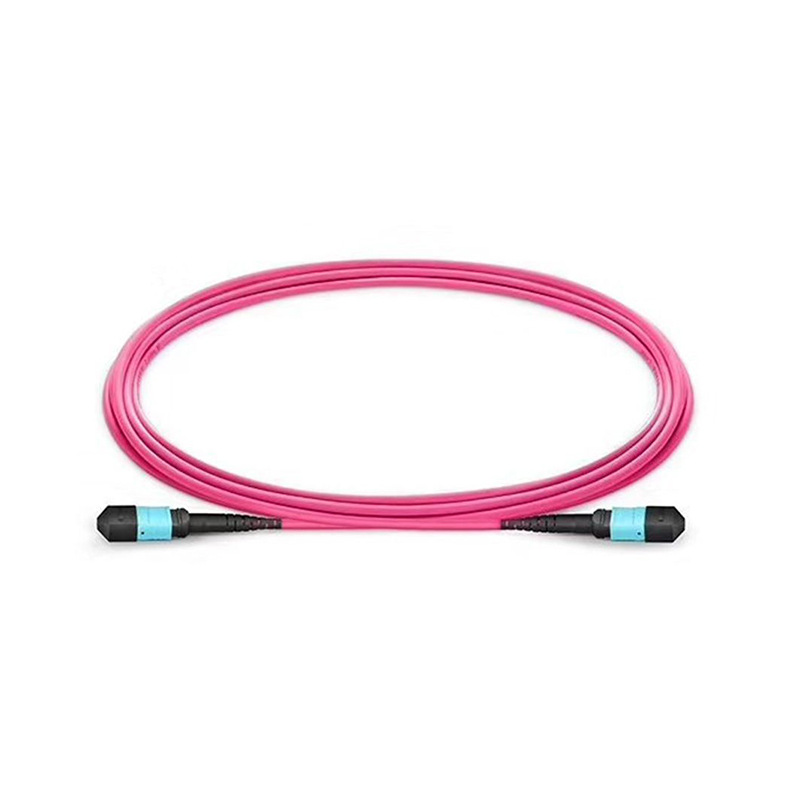
MPO Fiber Cable: High-Density 12/24-Fiber Solutions for Data Centers

All Categories
Reliable Mpo Fiber Cable for High-Density Network Applications

Reliable Mpo Fiber Cable for High-Density Network Applications

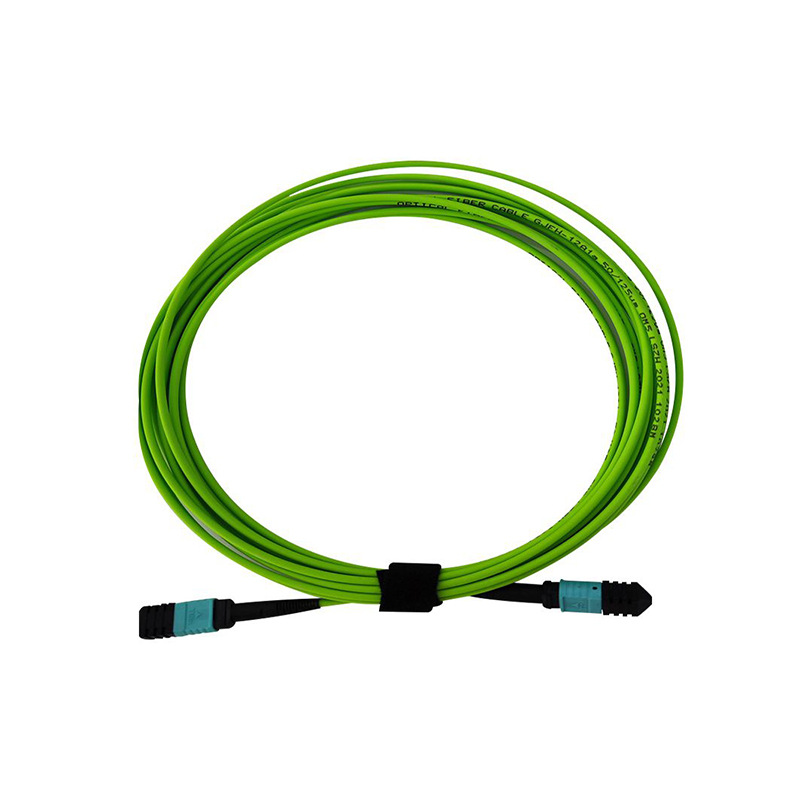
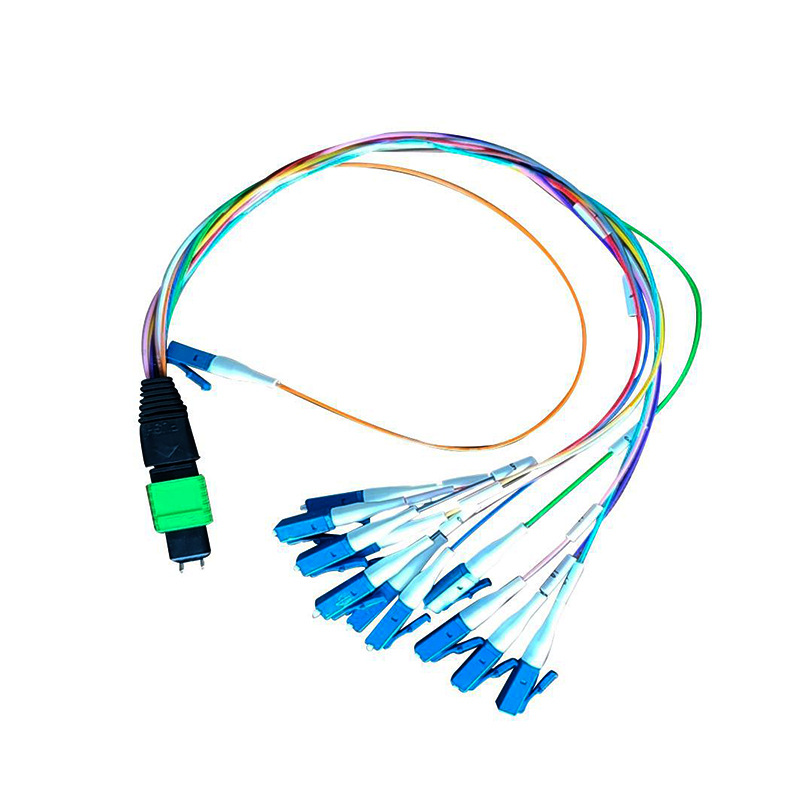
Mpo Fiber Cable assemblies provide an efficient way to organize multiple optical fibers within compact network infrastructure. Available in common 8, 12, 16, and 24-fiber configurations, they support high-density connections across data centers, telecom facilities, enterprise networks, and fiber distribution systems. By grouping multiple optical channels into one trunk assembly, Mpo cables can reduce cable congestion and simplify backbone routing. Factory-terminated options can also reduce onsite preparation and support consistent connector performance. In a typical data center deployment, 12-fiber or 24-fiber cables can connect patch panels, fiber cassettes, and equipment racks while maintaining organized pathways. Proper connector polarity, fiber type, and interface selection help ensure compatibility and simplify future maintenance and network expansion.
Get A Quote

Case Study

High-Density Data Center Backbone

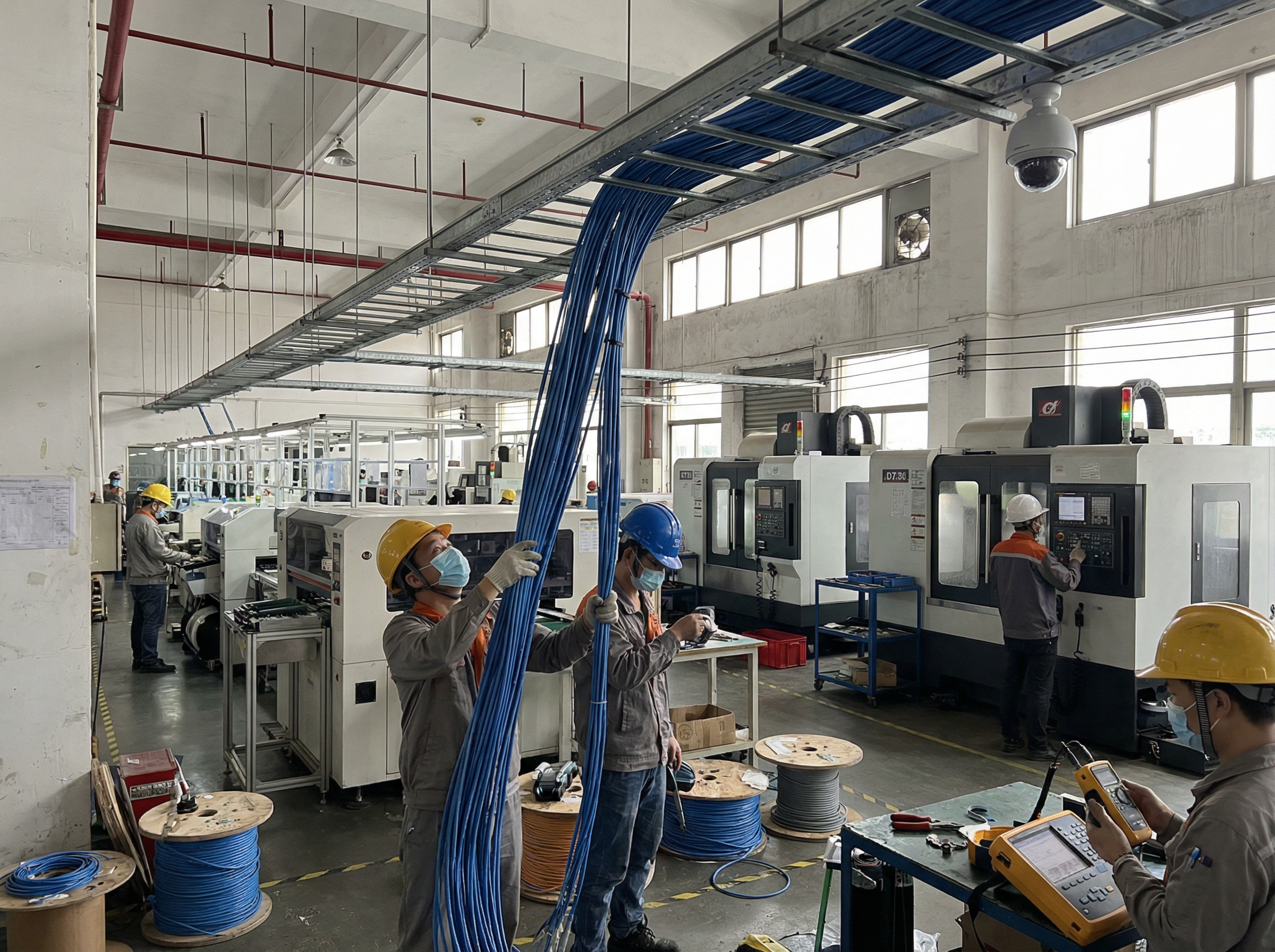
A data center expansion required additional backbone connections between centralized patch panels and multiple equipment racks. Mpo Fiber Cable assemblies were selected to organize 24 optical fibers within compact trunk routes. The grouped cable structure helped reduce congestion in overhead pathways and simplified routing between rack zones. Factory-terminated assemblies reduced onsite preparation and allowed technicians to deploy multiple channels through standardized interfaces. During commissioning, the installation team used documented polarity and cable labeling procedures to identify each connection efficiently. The completed backbone provided a cleaner fiber architecture while leaving room for additional trunk assemblies as network capacity and equipment requirements increased.

Telecom Cabinet Connectivity

A telecom operator needed to improve fiber organization across distribution cabinets serving several network areas. Mpo Fiber Cable assemblies with 12-fiber configurations were used for backbone connections between cabinet sections. The multi-fiber trunk format allowed several optical channels to share compact cable pathways, helping preserve valuable cabinet space. Pre-terminated connectors also reduced field preparation during installation and supported consistent connection quality. Technicians used standardized labels and polarity planning to simplify commissioning and maintenance. The resulting infrastructure provided a structured connection method that could accommodate additional 12-fiber assemblies as network demand increased, supporting both current connectivity requirements and future telecom capacity expansion.

Enterprise Network Infrastructure Upgrade

An enterprise customer upgraded its fiber backbone to support additional optical equipment across three equipment rooms. Mpo Fiber Cable assemblies were installed as 12-fiber trunk connections between patching systems and network devices. Grouping multiple fibers into dedicated assemblies helped reduce cable volume and improved pathway organization compared with numerous individual duplex cables. Factory termination simplified installation and reduced onsite fiber preparation requirements. The technical team also used consistent polarity and labeling standards to improve connection identification during commissioning. After the upgrade, the enterprise had a more structured fiber backbone that could support additional connections through modular expansion without requiring major changes to the existing cable infrastructure.

Related products

Mpo Fiber Cable assemblies are engineered for high-density optical networks where multiple fibers must be organized within compact, reliable cable structures. They are suitable for data centers, telecommunications facilities, enterprise networks, fiber distribution cabinets, patch panels, and backbone systems. Common configurations include 8, 12, 16, and 24 fibers, allowing network designers to match cable capacity with specific infrastructure requirements. Factory-terminated assemblies can provide consistent connector preparation while reducing field termination work during large deployments. Mpo cables can connect patch panels, fiber cassettes, adapters, switches, and distribution equipment through compatible multi-fiber interfaces. In a typical data center installation, a 24-fiber trunk can consolidate multiple optical channels into one organized route, helping improve rack and pathway management. Manufacturing focuses on fiber positioning, cable construction, connector alignment, and polarity consistency. Buyers should verify fiber type, connector gender, polarity, cable length, insertion loss, and equipment compatibility before deployment.

Frequently Asked Questions

What is an Mpo Fiber Cable used for?

An Mpo Fiber Cable is used to connect multiple optical fibers through a compact multi-fiber cable assembly. It is commonly deployed in data centers, telecom facilities, enterprise networks, patch panels, fiber cassettes, and backbone systems where high-density connectivity and organized cable routing are required.
Common Mpo Fiber Cable configurations include 8, 12, 16, and 24 fibers. The correct configuration depends on network capacity, equipment interfaces, and cabling architecture. Twelve-fiber assemblies are frequently used for structured connections, while 24-fiber cables are useful for higher-density backbone applications in large data centers and telecom environments.
Yes. Mpo Fiber Cable is well suited to data center backbone, inter-rack, and high-density equipment connections. It can connect patch panels, cassettes, switches, and distribution equipment while grouping multiple optical channels into organized trunk assemblies. Fiber type, polarity, connector configuration, and transmission requirements should be verified before installation.
Pre-terminated Mpo Fiber Cable can reduce onsite termination work and simplify installation planning. Factory-assembled connectors provide consistent preparation and allow technicians to deploy multi-fiber trunk links more efficiently. In large data center or telecom projects, pre-terminated assemblies can also improve cable organization and simplify polarity management during commissioning.
Selection should consider fiber count, fiber type, connector type, gender, polarity, cable length, insertion loss, return loss, and transmission requirements. The cable should match connected adapters, patch panels, cassettes, and equipment interfaces. Confirming these specifications before ordering helps prevent compatibility issues and supports reliable optical network performance.

Related article

Intelligent Power Distribution, Precision Metering – An In-Depth Look at the GLGW PDU Series

21

May

Intelligent Power Distribution, Precision Metering – An In-Depth Look at the GLGW PDU Series

View More
How to insert MPO connectors correctly?

07

Jul

How to insert MPO connectors correctly?

Real World Field Experiences with High Density Fiber Networks When managing an emergency data center migration last winter, my engineering team ran into an unexpected drop in performance on our main 40G trunk lines. After spending hours checking so...
View More
How to classify data cables by usage scenarios?

14

Jul

How to classify data cables by usage scenarios?

Real World Field Experiences with Multi Environment Network Deployments During a comprehensive network migration for a financial headquarters last spring, our deployment crew encountered major connectivity dropouts across different operational floo...
View More
How to lay bulk cable along pipelines safely?

21

Jul

How to lay bulk cable along pipelines safely?

Real World Field Experiences with Industrial Co Location Routing During an extensive industrial network expansion across a remote coastal oil terminal three summers ago, my installation team faced a massive challenge with electromagnetic interferen...
View More

Customer Testimonials

Daniel Harris

We deployed 24-fiber Mpo cables across four data center rack zones. The compact trunk design improved cable routing and reduced congestion during our backbone expansion project.

Mark Evans

Our telecom installation used 12-fiber Mpo cables between distribution cabinets. Pre-terminated assemblies shortened installation work and made backbone maintenance easier for the technical team.

Get a Free Quote

Our representative will contact you soon.
Email
Mobile/WhatsApp
Name
Company Name
Message
0/1000
Compact Multi-Fiber Cable Architecture

Compact Multi-Fiber Cable Architecture

Mpo Fiber Cable technology allows multiple optical fibers to be grouped into compact trunk assemblies, providing an organized solution for high-density network infrastructure. Configurations such as 8, 12, 16, and 24 fibers can support different backbone and equipment connection requirements. In a data center environment, a 24-fiber cable can consolidate multiple optical channels into a single structured route, helping reduce congestion around patch panels and equipment racks. The grouped architecture also makes cable identification and routing easier during installation and maintenance. When used with compatible Mpo connectors, adapters, and cassettes, these cables provide a modular connection platform for scalable optical networks while making efficient use of rack and pathway space.
Efficient Installation With Pre-Terminated Assemblies

Efficient Installation With Pre-Terminated Assemblies

Pre-terminated Mpo Fiber Cable assemblies can help simplify fiber installation by reducing field termination requirements. Factory-assembled connectors support consistent preparation and allow technicians to deploy multi-fiber trunk connections efficiently across large projects. For example, a 12-fiber cable can connect telecom distribution cabinets while minimizing individual fiber handling. In a data center, 24-fiber assemblies can provide structured links between patching zones and equipment racks. Standardized cable assemblies also support clearer polarity planning and connection identification when installation teams follow a documented cabling design. Selecting the appropriate fiber specification, connector type, cable length, and polarity remains essential. Properly matched assemblies can improve deployment efficiency while supporting organized, maintainable fiber infrastructure.
Scalable Connectivity for Growing Fiber Networks

Scalable Connectivity for Growing Fiber Networks

Mpo Fiber Cable assemblies can support network expansion by providing modular multi-fiber connections between distribution systems and optical equipment. Instead of routing numerous individual duplex cables, installers can use trunk assemblies to organize multiple channels within dedicated cable pathways. A 12-fiber cable may serve inter-rack connections, while 24-fiber versions can support higher-density backbone links between distribution areas. This architecture makes it easier to introduce additional fiber assemblies when network capacity grows or new equipment is added. Before deployment, network designers should confirm fiber type, connector configuration, polarity, cable length, and transmission requirements. With suitable planning and compatible components, Mpo Fiber Cable provides a structured foundation for data center, telecom, and enterprise fiber infrastructure.

Get a Free Quote

Our representative will contact you soon.
Email
Mobile/WhatsApp
Name
Company Name
Message
0/1000