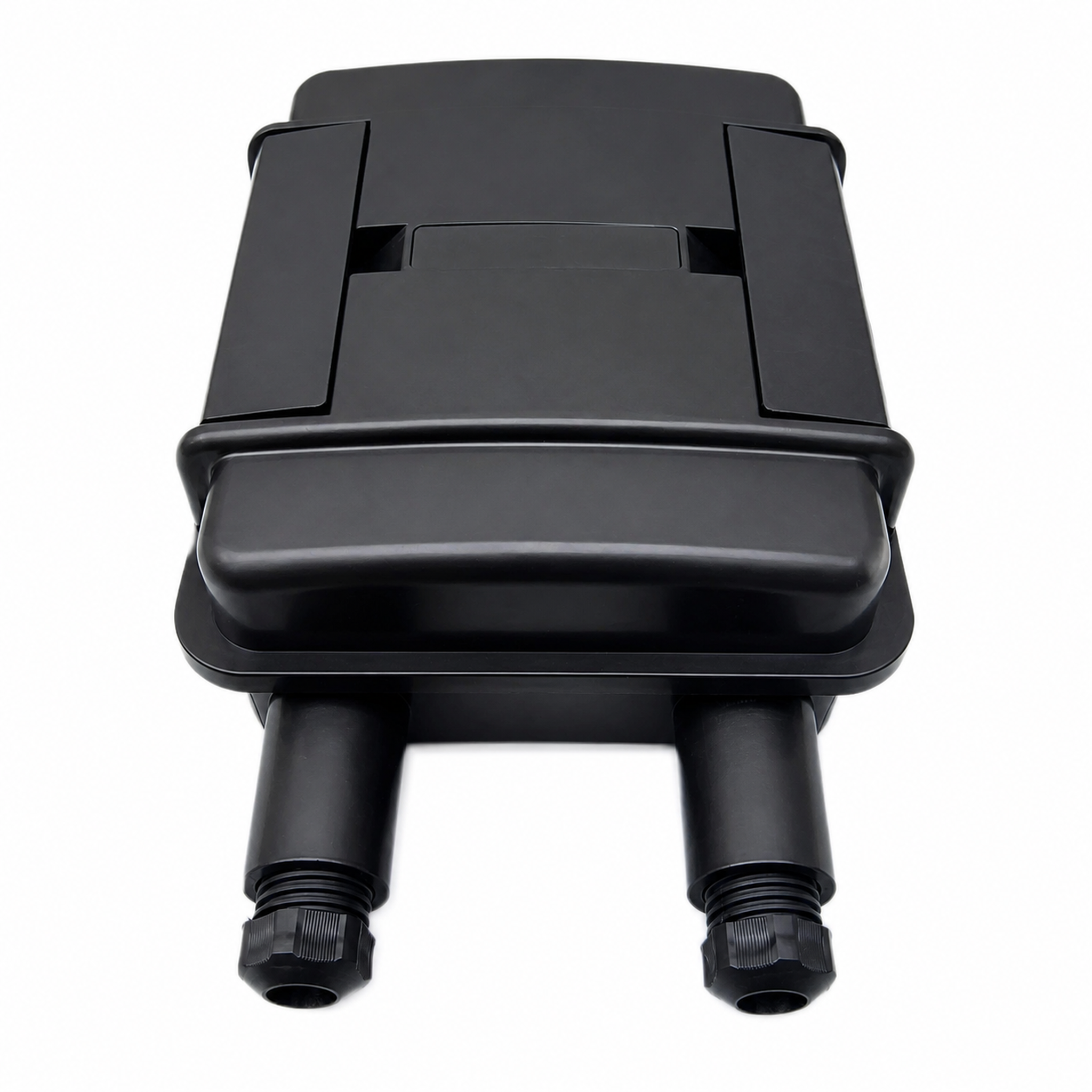
Fiber Optic Joint Closure: IP65 Waterproof FTTH Splice Enclosure

All Categories
Reliable Fiber Joint Protection for FTTH and Telecom Networks

Reliable Fiber Joint Protection for FTTH and Telecom Networks

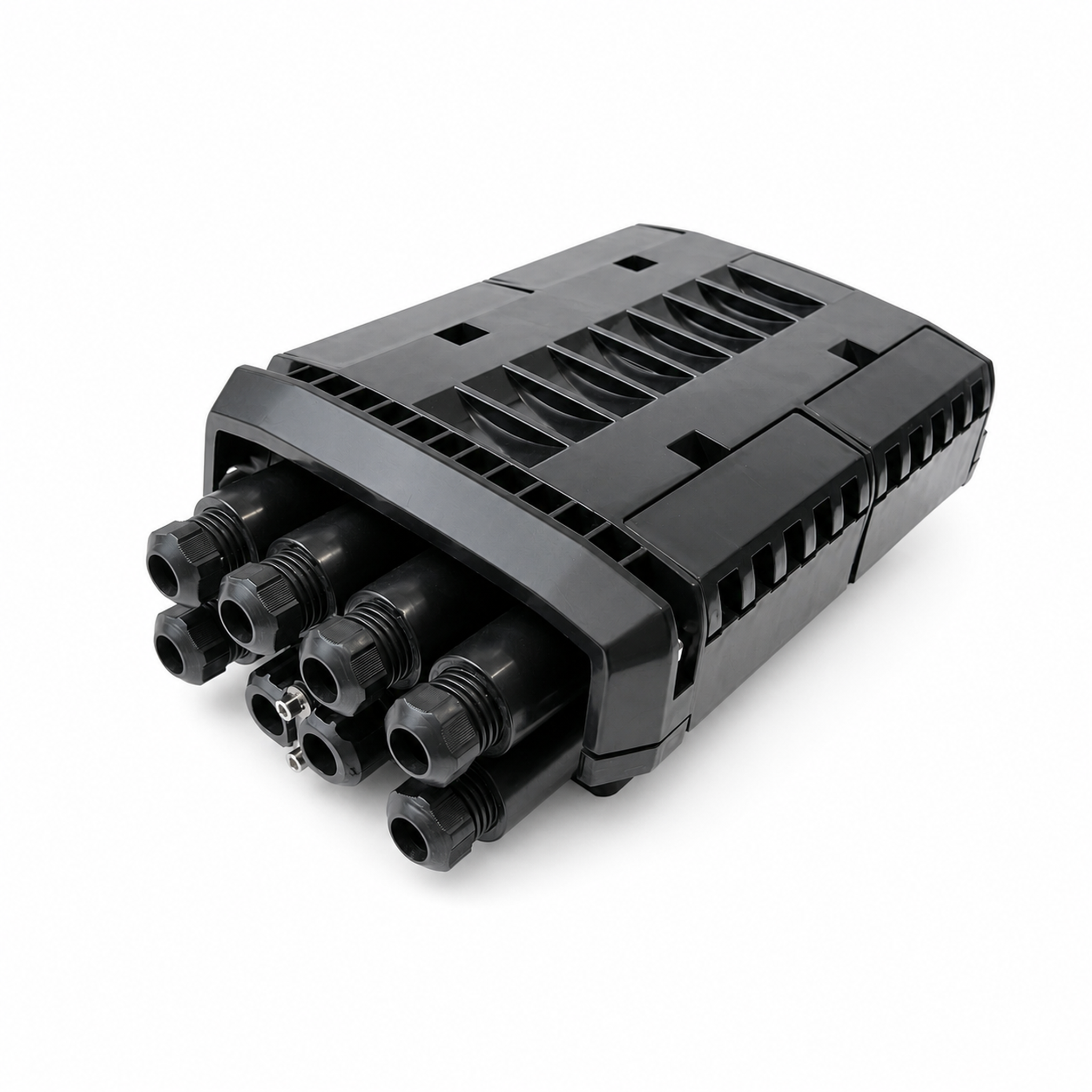
A fiber optic joint closure provides a protected enclosure for joining, splicing, and organizing optical fiber cables in communication networks. It helps shield fiber splice points from moisture, dust, mechanical stress, and changing outdoor conditions while keeping cable routing structured. The closure can accommodate splice trays, cable entry ports, sealing components, and fiber management accessories according to project requirements. It is suitable for aerial, underground, direct-buried, and other outdoor installations across FTTH, FTTx, broadband, metropolitan fiber, and telecom backbone networks. Fiber count, cable diameter, splice capacity, and entry configuration can be considered during selection. With organized internal routing and accessible splice areas, a fiber optic joint closure supports efficient installation, maintenance, repair, and future expansion of optical fiber infrastructure.
Get A Quote

Case Study

FTTH Fiber Distribution

An FTTH contractor needed a protected jointing point for connecting feeder and distribution fiber cables along a residential broadband route. A fiber optic joint closure was installed to organize splice trays and protect connections from outdoor exposure. Dedicated cable entry positions helped separate different fiber routes, while the internal structure provided clear access to individual splice groups. The configuration supported current subscriber connections and reserved space for future distribution branches. This arrangement allowed technicians to complete testing and maintenance without unnecessarily disturbing unrelated fibers. The solution was suitable for residential FTTH networks, broadband expansion projects, and fiber access infrastructure requiring organized cable joint management.

Underground Fiber Splicing

A metropolitan telecom project required protected splice points where multiple underground fiber cables were joined. A fiber optic joint closure was positioned at a planned underground access point to centralize splice management and cable routing. The enclosure provided dedicated space for splice trays and cable entry, helping technicians keep different fiber groups organized. Its protected structure helped reduce exposure to moisture and underground contamination while maintaining accessible connections for maintenance. The configuration was planned according to the required splice capacity and allowed room for future cable additions. This application suited underground broadband, metropolitan fiber, and telecom backbone networks with multiple cable routes.

Aerial Fiber Connection

An aerial fiber deployment needed a reliable enclosure for joining cable sections along an outdoor communication route. A fiber optic joint closure provided organized space for splice trays, cable entry, and fiber routing while helping protect splice points from rain, dust, and other environmental exposure. The internal arrangement kept fiber groups separated and supported appropriate cable bending. Several distribution branches were managed through the closure, with additional capacity reserved for future connections. Technicians could access the splice area during inspection or repair without unnecessarily disturbing other cable routes. This approach is suitable for aerial FTTH, rural broadband, telecom distribution, and long-distance fiber networks.

Related products

A fiber optic joint closure is designed to provide a protected and organized environment for joining and splicing optical fiber cables. It typically includes space for splice trays, cable entry ports, sealing components, and fiber routing accessories, allowing multiple cable sections to be managed within one enclosure. Depending on the network design, the closure can support aerial, underground, direct-buried, and other outdoor applications. Fiber count, cable diameter, splice capacity, and cable entry requirements can be considered when selecting the appropriate configuration. In FTTH networks, it can connect feeder and distribution fibers at strategic access points. For telecom and metropolitan backbone systems, it provides protected management for critical cable joints. Structured internal routing also makes fiber identification, testing, inspection, repair, and future network expansion more efficient.

Frequently Asked Questions

What is a fiber optic joint closure used for?

A fiber optic joint closure is used to protect and organize optical fiber joints where two or more cables are joined or spliced. It provides space for splice trays and cable routing while helping protect sensitive fiber connections from moisture, dust, mechanical stress, and environmental exposure.
They can be installed in aerial, underground, direct-buried, and outdoor fiber networks. Common applications include FTTH, FTTx, broadband access, metropolitan fiber, rural communication, and telecom backbone infrastructure where cable joints require physical and environmental protection.
Depending on the configuration, a fiber optic joint closure may include splice trays, cable entry ports, sealing components, fiber routing accessories, and cable fixation structures. The internal layout can be selected according to fiber count, cable diameter, splice capacity, and installation requirements.
Selection should consider fiber count, splice capacity, cable diameter, number of cable entries, installation method, and environmental conditions. The enclosure should also provide sufficient internal routing space to maintain appropriate fiber bending and allow technicians to access splice areas during maintenance.
Yes, an appropriately configured closure can provide additional splice capacity or internal space for future fiber connections. Planning expansion requirements during the initial installation can simplify later network upgrades and allow new cable branches to be added without replacing the complete enclosure.

Related article

2026 Trends: Smart AI Needs Better Cables for Big Computer Buildings and Homes

08

May

2026 Trends: Smart AI Needs Better Cables for Big Computer Buildings and Homes

View More
Looking for Reliable PDU & Fibre Optic Cable Suppliers in China? Visit GLGW at the Global Sources Hong Kong Show (Booth 9B43)

08

May

Looking for Reliable PDU & Fibre Optic Cable Suppliers in China? Visit GLGW at the Global Sources Hong Kong Show (Booth 9B43)

View More
How to lay bulk cable along pipelines safely?

21

Jul

How to lay bulk cable along pipelines safely?

Real World Field Experiences with Industrial Co Location Routing During an extensive industrial network expansion across a remote coastal oil terminal three summers ago, my installation team faced a massive challenge with electromagnetic interferen...
View More
UTP LAN Cable Application for Office Local Networks.

04

Aug

UTP LAN Cable Application for Office Local Networks.

Implementing a structured Unshielded Twisted Pair (UTP) Local Area Network (LAN) cabling infrastructure is the cornerstone of any modern commercial workspace. While wireless technologies (Wi-Fi) provide mobility, high-density office environments wi...
View More

Customer Testimonials

Robert Davis

“The closure provided our installation team with a structured way to manage fiber joints. Splice access was straightforward, and the organized routing made testing and maintenance easier.”

Chris Wilson

“We installed the closure on an outdoor broadband route with several cable sections. The internal layout kept splice groups organized and provided useful space for future connections.”

Get a Free Quote

Our representative will contact you soon.
Email
Mobile/WhatsApp
Name
Company Name
Message
0/1000
Protected Optical Fiber Jointing

Protected Optical Fiber Jointing

A fiber optic joint closure creates a dedicated environment for protecting optical fiber connections where multiple cables meet. Splice trays help separate individual fiber groups, while cable entry and fixation components maintain organized routing inside the enclosure. This structure is useful for FTTH, broadband, and telecom networks where feeder and distribution cables converge at important connection points. Configurations can be selected according to fiber count, cable diameter, splice capacity, and entry requirements. By keeping splice areas protected and accessible, technicians can perform testing, inspection, and repair work more efficiently. The organized design also helps reduce unnecessary cable movement during maintenance, supporting cleaner and more manageable fiber infrastructure.
Versatile Aerial and Underground Applications

Versatile Aerial and Underground Applications

Fiber optic joint closures can support different installation environments according to network requirements. In aerial applications, the closure provides a protected location for joining fiber cable sections along outdoor communication routes. For underground deployments, it can be positioned at access points where feeder and distribution cables need to be connected and managed. The enclosure helps maintain structured fiber routing while limiting exposure to environmental conditions. Typical applications include FTTH, rural broadband, metropolitan fiber, campus networks, and telecom backbone infrastructure. Cable diameter, fiber count, splice capacity, and entry configuration can be considered during selection, allowing contractors to match the closure to specific installation conditions.
Designed for Maintenance and Expansion

Designed for Maintenance and Expansion

A fiber optic joint closure can be configured to accommodate both current splice requirements and future network expansion. Additional splice capacity or internal routing space can be considered during the initial installation, allowing new fiber branches to be introduced as coverage grows. Organized splice trays make existing fiber groups easier to identify, while structured cable entry helps technicians add new connections with less disruption. This is particularly useful for phased FTTH and broadband deployments where service areas expand progressively. A well-organized joint closure also provides easier access for testing and repair. By combining protected splicing with expandable fiber management, it supports long-term network maintenance and infrastructure upgrades.

Get a Free Quote

Our representative will contact you soon.
Email
Mobile/WhatsApp
Name
Company Name
Message
0/1000