
 EN
EN
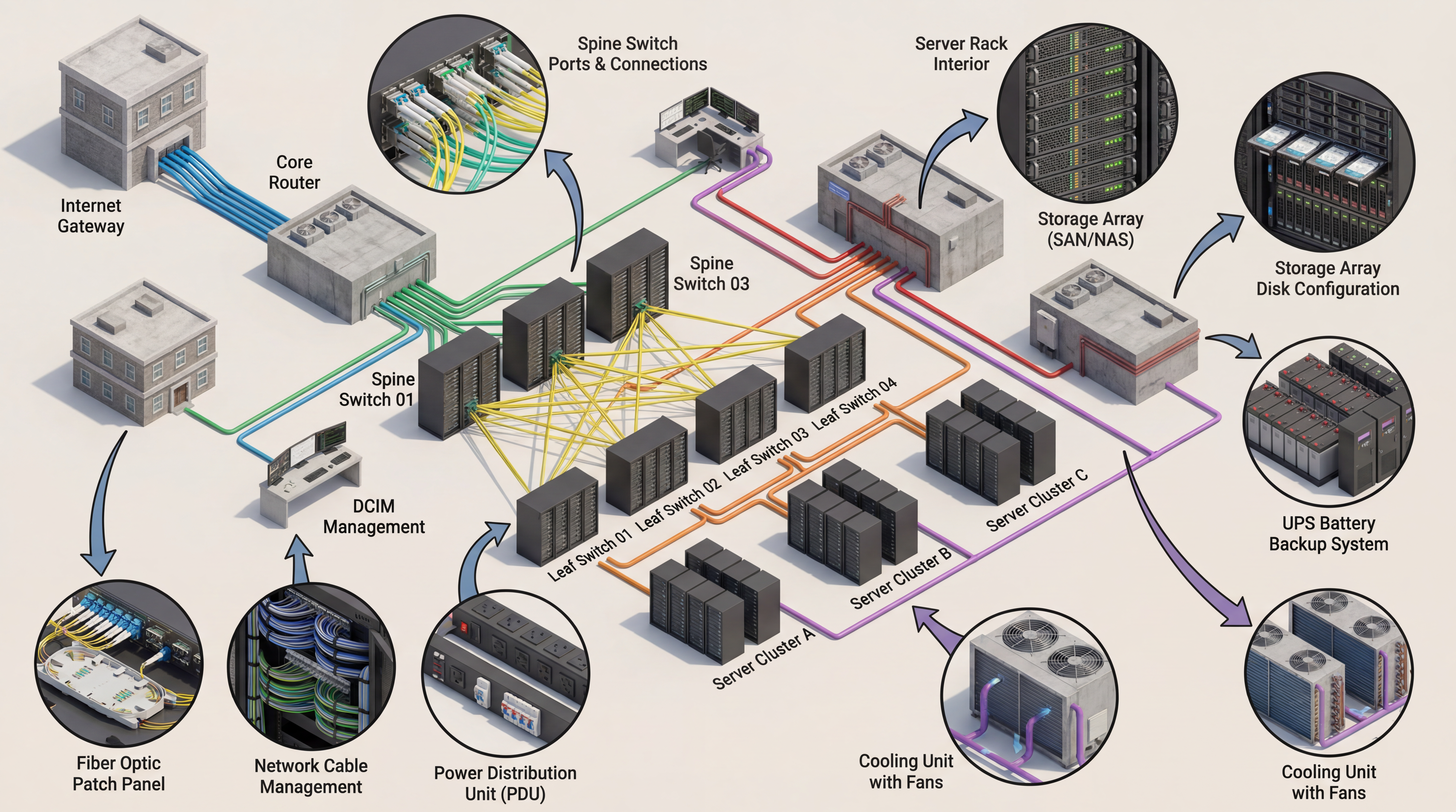
Implementing a structured Unshielded Twisted Pair (UTP) Local Area Network (LAN) cabling infrastructure is the cornerstone of any modern commercial workspace. While wireless technologies (Wi-Fi) provide mobility, high-density office environments with heavy bandwidth demands—such as continuous video conferencing, cloud database synchronization, large file transfers, and Voice over IP (VoIP) communications—depend entirely on a hardwired network foundation.
A well-designed UTP LAN cabling layout ensures low latency, minimal packet loss, maximum data throughput, and essential physical-layer security across all office workstations and peripheral devices.
1. Why Wired UTP Infrastructures Outperform Wireless-Only Offices
In a modern corporate setup, relying solely on wireless access points often leads to radio frequency (RF) congestion, signal degradation through office walls, high latency, and security vulnerabilities. Implementing a high-quality UTP network addresses these operational hurdles:
-
Guaranteed Dedicated Bandwidth: Unlike Wi-Fi, where bandwidth is shared among all connected users on an access point, a dedicated UTP drop provides every workstation with an unthrottled, full-duplex connection.
-
Minimal Packet Loss and Reduced Latency: Hardwired connections eliminate electromagnetic interference (EMI) drops and packet retransmissions, ensuring smooth real-time traffic for VoIP calls and video conferencing.
-
Power over Ethernet (PoE) Support: Modern UTP cables deliver both high-speed data and electrical power over a single cable run, simplifying the deployment of IP phones, wireless access points, security cameras, and smart lighting without needing separate power outlets.
2. Selecting the Right Cable Category for Office Workloads
Choosing the appropriate cable category determines your network’s lifespan, maximum bandwidth, and capability to support future speed upgrades without requiring destructive wall demolition.
| Cable Category | Max Bandwidth | Max Data Rate | Recommended Distance | Primary Office Application |
| Cat5e | 100 MHz | 1 Gbps | Up to 100 meters | Basic IP telephony, legacy desktop connections, basic web browsing |
| Cat6 | 250 MHz |
10 Gbps (up to 55m) 1 Gbps (up to 100m) |
Up to 50–55 meters for 10G 100 meters for 1G |
Standard modern offices, HD video conferencing, large spreadsheet processing |
| Cat6a | 500 MHz | 10 Gbps | Up to 100 meters | High-density workstations, server backbones, media editing, future-proof runs |
3. Structural Standards and Best Practices for Office Layouts
Commercial cabling installations must strictly adhere to international structured cabling standards, such as TIA/EIA-568 and ISO/IEC 11801, to maintain long-term reliability and compliance with building codes.
Key Architectural Elements:
-
Work Area Outlet (WAO): The physical wall plate or floor box where user devices connect via flexible stranded patch cords. Best practices dictate running at least two Cat6 or Cat6a drops per desk (one for data, one for voice/PoE).
-
Horizontal Cabling: Solid-copper UTP cables routed through ceiling trays or under raised floors connecting the Work Area to the Telecommunications Room (TR). The total horizontal run must not exceed 90 meters, leaving 10 meters allocated for patch cords.
-
Patch Panel Termination: In the network rack, solid cables are neatly punched down onto patch panels (typically using T568B wiring standards) for organized management and quick reassignment of ports.
4. Operational Best Practices: Color Coding and Cable Management
An frequently overlooked aspect of network maintenance is physical cable organization. Implementing standardized management techniques reduces downtime and speeds up troubleshooting:
-
Color-Coded Jacket Schema: Assigning specific cable jacket colors based on function simplifies visual tracing (e.g., Blue for workstation data, White for VoIP phones, Red for security cameras/fire alarms, Yellow for Wi-Fi Access Points).
-
Bend Radius & Cable Strain: Maintaining the manufacturer's specified minimum bend radius (typically 4 times the cable's outer diameter) prevents conductor deformation and performance drops caused by internal pair untwisting.
-
Plenum (CMP) vs. Riser (CMR) Jackets: Ensure cabling routed through air ducts or drop ceilings meets local fire safety codes by utilizing flame-retardant Plenum-rated jackets that produce minimal toxic smoke when burned.