Data Center CDU: Centralized Liquid Cooling for AI & HPC

All Categories
Centralized Cooling Distribution for Modern Data Centers

Centralized Cooling Distribution for Modern Data Centers

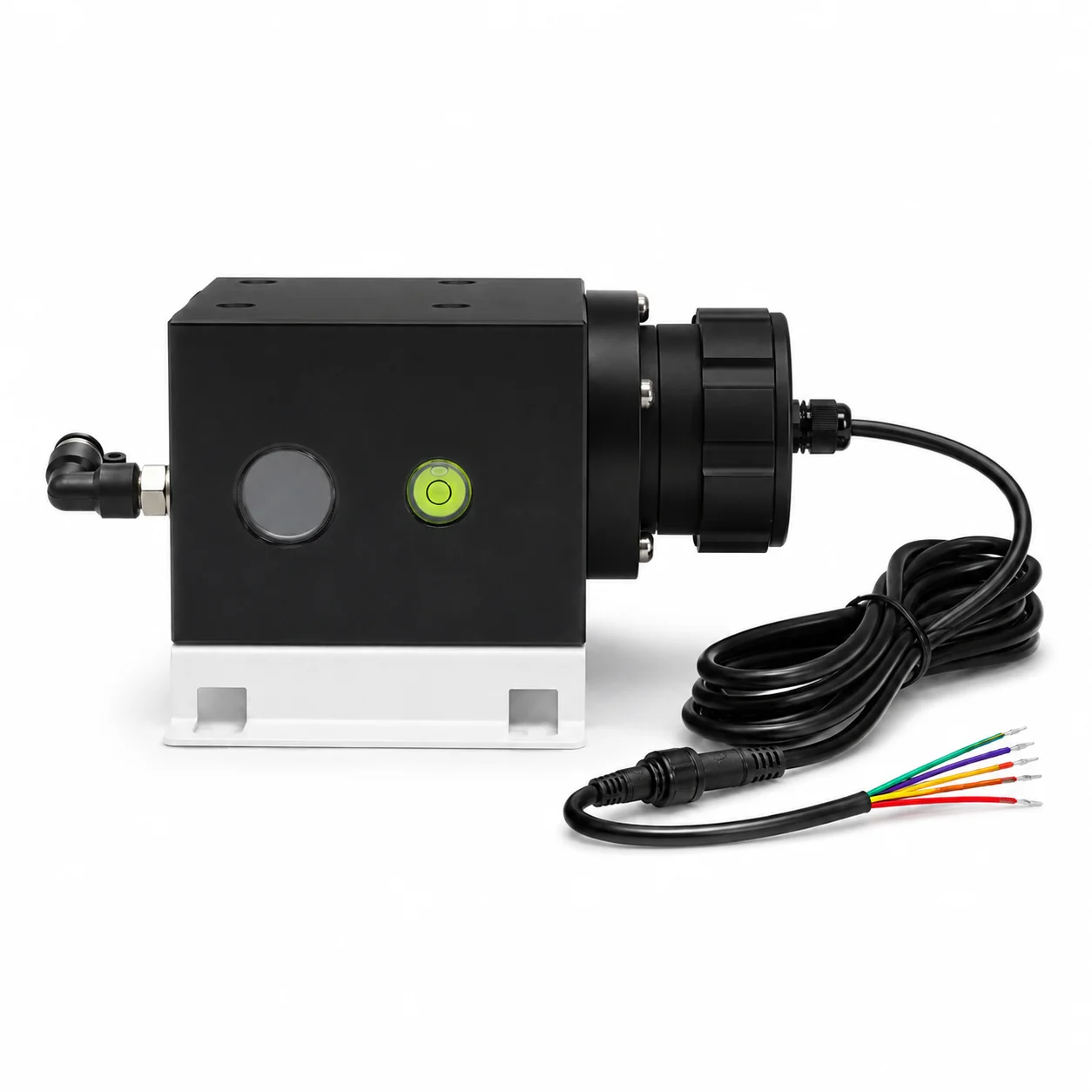
A data center CDU, or cooling distribution unit, serves as the interface between facility cooling infrastructure and liquid-cooled IT equipment. It manages coolant circulation, heat transfer, temperature control, and flow regulation while supporting reliable thermal management for high-density computing environments. Depending on project requirements, a CDU may include pumps, heat exchangers, sensors, valves, filtration systems, and intelligent monitoring components. Data center CDUs are commonly deployed in AI computing facilities, GPU clusters, HPC environments, cloud platforms, and enterprise data centers. By centralizing cooling distribution functions, the system helps simplify infrastructure management, improve cooling efficiency, and support scalable deployment of liquid-cooled equipment as computational demand continues to increase.
Get A Quote

Case Study

AI Computing Infrastructure

A data center CDU can support AI computing environments where GPU clusters generate significant thermal loads within a limited physical footprint. The CDU manages coolant circulation between facility cooling systems and server-level liquid cooling loops, helping maintain controlled operating conditions. Depending on project requirements, monitoring systems can track key cooling parameters while pumps and heat exchangers support heat transfer. This approach allows operators to deploy high-density AI workloads while maintaining organized cooling infrastructure. The CDU also creates a centralized management point that simplifies maintenance activities and future cooling capacity expansion as computing requirements continue to grow.

HPC Data Center Deployment

High-performance computing facilities often require advanced thermal management because processors operate continuously under demanding workloads. A data center CDU can provide a dedicated interface between facility water systems and liquid-cooled racks. Cooling distribution can be configured according to thermal load, coolant characteristics, flow requirements, pressure limits, and redundancy objectives. The CDU helps organize coolant delivery while providing a central location for monitoring and maintenance. As HPC clusters expand, a properly sized CDU infrastructure can support additional computing resources while maintaining consistent cooling performance across multiple rack environments.

Enterprise Data Center Upgrade

Many enterprise data centers are introducing liquid cooling to support increasing rack power densities. A data center CDU can facilitate this transition by connecting liquid-cooled equipment with existing facility cooling infrastructure. Depending on the deployment strategy, operators can implement liquid cooling for selected high-density racks while maintaining traditional cooling methods elsewhere. The CDU provides a structured cooling interface that supports phased infrastructure upgrades. This flexibility allows organizations to gradually expand liquid cooling capacity while aligning investments with evolving computing requirements and operational goals.

Related products

A data center CDU is designed to distribute, monitor, and manage liquid coolant within modern data center environments. Acting as an interface between facility cooling resources and IT equipment, the CDU supports liquid-cooled servers, GPU clusters, AI platforms, and high-performance computing systems. Depending on system requirements, the CDU may integrate pumps, heat exchangers, filtration units, sensors, valves, and intelligent controls to maintain cooling performance. Key design considerations include thermal load, flow rate, pressure requirements, coolant compatibility, redundancy strategy, connection architecture, and available installation space. By centralizing cooling functions, the CDU simplifies system management and helps support efficient deployment of liquid cooling technologies. As data centers continue adopting high-density computing infrastructure, cooling distribution units provide a scalable foundation for managing increasing thermal demands while maintaining organized and serviceable cooling networks.

Frequently Asked Questions

What is a data center CDU?

A data center CDU is a cooling distribution unit that manages coolant circulation between facility cooling infrastructure and liquid-cooled IT equipment. It helps regulate flow, pressure, and temperature while providing a centralized interface for cooling management and monitoring.
As rack power density increases, liquid cooling becomes more common. A CDU helps organize coolant delivery, heat transfer, and monitoring functions while supporting reliable thermal management for AI servers, GPU clusters, HPC systems, and other high-density computing equipment.
A data center CDU can support direct-to-chip cooling, cold plate systems, liquid-cooled racks, AI servers, GPU platforms, HPC clusters, and enterprise computing infrastructure. Configuration requirements depend on thermal load, cooling architecture, and facility infrastructure.
Consider cooling capacity, flow rate, pressure range, heat exchanger requirements, coolant type, redundancy objectives, monitoring capabilities, connection interfaces, and future expansion plans. The CDU should align with both equipment cooling requirements and facility infrastructure.
Yes. Properly planned CDU systems can provide scalable cooling infrastructure that accommodates additional liquid-cooled racks and computing resources. Capacity planning should consider future thermal loads, cooling distribution requirements, and long-term operational objectives.

Related article

Intelligent Cabling Solutions for Future Networks

21

May

Intelligent Cabling Solutions for Future Networks

View More
Fiber Optic Patch Panel: High-Density Modular Rack-Mount Solution for Reliable Network Management

21

May

Fiber Optic Patch Panel: High-Density Modular Rack-Mount Solution for Reliable Network Management

Discover how a high-density fiber optic patch panel improves cable organization, network reliability, scalability, and maintenance for data centers, telecom, FTTX, and enterprise networks.
View More
High durability patch cord for industrial network systems.

07

Sep

High durability patch cord for industrial network systems.

Industrial Patch Cord Explained: Construction, Durability, and Selection Guide for Harsh Environments What Is an Industrial Patch Cord and Why Is It Different from Standard Network Cables? An industrial patch cord is a specially designed Ethernet c...
View More
LAN Cable Quality Standards for Enterprise Local Area Networks.

17

Sep

LAN Cable Quality Standards for Enterprise Local Area Networks.

Enterprise LAN Cable Selection Guide: Categories, Shielding, Standards, and Performance Why Choosing the Right LAN Cable Matters for Enterprise Networks A reliable LAN cable is the foundation of modern enterprise network infrastructure. Although wi...
View More

Customer Testimonials

Kevin Adams

“The CDU provided a centralized cooling management point for our GPU deployment. Monitoring functions improved operational visibility and helped our team maintain consistent cooling conditions across multiple racks.”

Jason Walker

“We introduced the CDU during a liquid cooling upgrade project. The system simplified coolant distribution and provided a practical platform for future expansion of our high-density computing environment.”

Get a Free Quote

Our representative will contact you soon.
Email
Mobile/WhatsApp
Name
Company Name
Message
0/1000
Centralized Cooling Control

Centralized Cooling Control

A data center CDU centralizes key cooling functions within a single platform, helping operators manage coolant circulation, heat transfer, monitoring, and system control more effectively. Pumps, heat exchangers, valves, sensors, and filtration components can be integrated according to project requirements. This centralized architecture provides a structured interface between facility cooling infrastructure and liquid-cooled IT equipment. Operators can monitor important cooling parameters from a common location while simplifying maintenance procedures. As cooling requirements evolve, centralized management can also make it easier to coordinate upgrades, optimize operating conditions, and support additional liquid-cooled equipment within the data center environment.
Support for High-Density Computing

Support for High-Density Computing

Modern AI servers, GPU clusters, and HPC systems generate substantial heat that often exceeds the practical limits of conventional air cooling. A data center CDU supports these environments by providing controlled coolant distribution and thermal management capabilities. The system can be configured according to rack density, thermal load, coolant characteristics, flow requirements, and redundancy objectives. By supporting liquid cooling architectures, the CDU enables operators to deploy advanced computing technologies while maintaining organized cooling infrastructure. This capability is increasingly important as organizations adopt larger AI workloads and continue expanding computational capacity within existing data center footprints.
Future-Ready Cooling Infrastructure

Future-Ready Cooling Infrastructure

As computing technologies continue to evolve, data centers require cooling infrastructure that can scale with increasing thermal demands. A data center CDU provides a flexible foundation for future liquid cooling expansion by supporting modular deployment strategies and adaptable cooling architectures. Capacity can be planned around current workloads while leaving room for future growth. Additional racks, cooling loops, and liquid-cooled systems can be integrated as operational requirements change. This scalability helps organizations align cooling investments with long-term infrastructure development plans while maintaining reliable thermal management across a growing portfolio of high-density computing resources.

Get a Free Quote

Our representative will contact you soon.
Email
Mobile/WhatsApp
Name
Company Name
Message
0/1000