
 EN
EN
Daily visual inspection and routine troubleshooting of patch cord
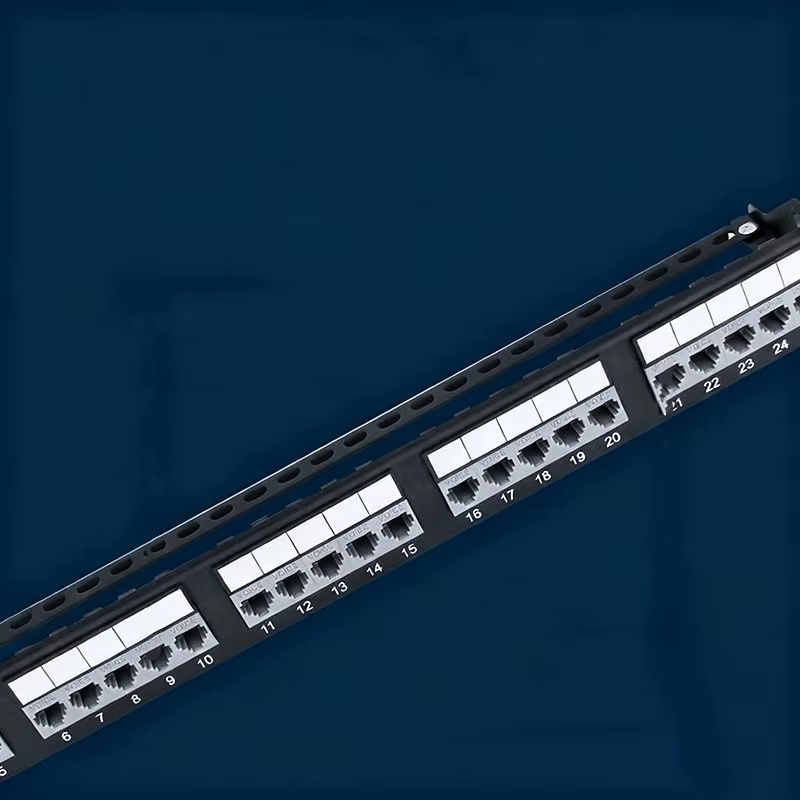
For anyone managing office networks, data centers or large-scale communication systems, patch cord maintenance is never a trivial task. Over my sixteen years working in the global structured cabling industry, I have dealt with countless network failures that trace back to neglected patch cord issues. One memorable case took place at a large electronics manufacturing facility where we completed an 800-point LAN and CCTV cabling project a few years ago. Three months after deployment, the client reported frequent intermittent disconnections and slow data transmission across multiple workstations and monitoring devices. Our on-site team ran a quick visual check first and found that many LC and FC patch cords were squeezed between heavy server equipment, their outer jackets scratched and connectors loosely plugged into fiber optic patch panels. Some patch cords also accumulated thick dust on connector ends due to poor ventilation in the equipment room. After we sorted out the tangled lines, reinserted loose connectors and did basic surface cleaning, the network stability improved noticeably right away. This experience taught our entire team that regular visual inspection stands as the first line of defense to keep patch cord working properly, and it should never be skipped no matter how busy daily operation gets.
A complete daily inspection routine covers two core parts: external condition check and connection status verification. When examining GLGW OS2 single mode fiber patch cord and other patch cord products, we start with the outer sheath. Our patch cord adopts high-quality LSZH or PE jackets, which deliver excellent anti-aging and abrasion resistance under normal use, but long-term extrusion, sharp friction or improper pulling will still cause cracks or peeling on the surface. Once the protective layer is damaged, internal optical fibers will be exposed to dust, moisture and physical damage easily. Next, we focus on connectors including LC simplex connectors and FC connectors. Check whether connectors are fully locked into ports on fiber optic patch panels, network switches and optical modems. Loose connection is one of the most common triggers for fluctuating optical signals. We also observe if there are obvious dust, oil stains or tiny debris attached to the end face of connectors. Industry experts from global communication standard organizations point out that more than 80 percent of short-term network instability problems are related to contaminated patch cord connectors, which raises insertion loss and disrupts normal signal transmission. For daily management, we suggest technical teams carry out visual inspection every week for high-traffic areas like data centers and equipment rooms, and conduct bi-weekly checks for regular office wiring areas, so hidden troubles can be spotted and handled at an early stage.
Standardized cleaning operations to protect patch cord performance
Proper cleaning is the most critical maintenance step for patch cord, and wrong cleaning methods will bring irreversible damage to precision optical components. Many on-site technicians make simple mistakes out of habit, such as wiping connector end faces with ordinary tissue, clothing or regular wet wipes. These rough materials will leave fine fiber residues or tiny scratches on the ceramic ferrule of connectors, permanently lowering the transmission performance of patch cord. Based on the requirements of ISO 11801 and ANSI/TIA-568 cabling standards, combined with our long-term service experience for nearly 200,000 corporate clients worldwide, we have summed up a set of standardized cleaning steps suitable for all types of patch cord in practical scenarios.
Before cleaning any GLGW patch cord, technicians must disconnect both ends from corresponding ports first to avoid accidental damage to optical modules and ports during operation. For LC single mode fiber patch cord and FC fiber patch cord which are widely used in data centers and FTTH projects, we recommend using professional fiber cleaning pens, lint-free cleaning cloths and dedicated optical fiber cleaning fluid with high purity. When cleaning the connector end face, hold the patch cord steadily and wipe gently in one single direction instead of rubbing back and forth. Repeated friction will wear the polished surface of the ferrule and affect coupling effect during connection. For dust accumulated on the outer jacket of patch cord, use a dry soft cloth to wipe away dirt. If there are stubborn stains in damp environments, slightly dampen the cloth and wipe gently, and make sure the cord is fully dried before reconnection.
The cleaning frequency should be adjusted according to the operating environment. In dusty industrial workshops, outdoor communication distribution boxes and equipment rooms with poor air circulation, weekly deep cleaning for patch cord connectors is necessary. For clean indoor office areas, commercial office buildings and well-ventilated data centers, monthly targeted cleaning is enough. Our OS2 G652D series patch cord features low-loss optical fiber cores and precisely polished connectors. With scientific and regular cleaning, these products can maintain stable transmission performance for years, keeping signal attenuation within the standard range specified by IEC 14763-3. We also remind users never to touch the connector end face with fingers directly, as sweat and grease on fingertips will form hard-to-remove stains and cause continuous signal loss.
Scientific layout and cabling management to avoid physical damage to patch cord
Even the highest-quality patch cord will fail prematurely if placed in a chaotic wiring environment. Physical damage like excessive bending, long-term extrusion and violent pulling is the main cause of permanent scrapping of patch cord in medium and long term. Our team once took charge of a 3,500-point tech park campus network project, and we formulated strict wiring and management rules for tens of thousands of patch cord used in the project. After years of operation, the failure rate of patch cord in this project remains extremely low, which fully proves the value of standardized layout management.
The first key rule is to control the bending radius strictly. Optical fiber inside patch cord is extremely sensitive to bending. Professional cabling norms clearly state that the minimum bending radius of single mode patch cord should not be less than six times the outer diameter of the cord body. Sharp right-angle bends or repeated folding will break internal optical fibers invisibly, leading to sudden network disconnection. When arranging patch cord inside 4U to 15U network cabinets and cable management systems, we use professional wire guides and routing slots to fix lines. Do not pull patch cord tightly during layout, and reserve proper loose margin for line movement and equipment maintenance. It is also forbidden to press patch cord under heavy network devices, metal brackets or other cables. In mixed wiring areas, separate optical fiber patch cord from power cables and strong-current lines. Apart from preventing electromagnetic interference, this separation can also avoid extrusion and abrasion between different types of lines.
Classified arrangement is another important part of daily management. We suggest labeling each patch cord clearly according to usage area, connected equipment and signal type. Clear labels help maintenance staff quickly identify lines during troubleshooting and avoid random dragging or misplugging. For redundant patch cord that are temporarily not in use, do not coil them too tightly or pile them randomly. Store them in loose loops and place them in dry and dustproof areas. Our full-series patch cord are designed with flexible cord bodies and durable structural design, which can adapt to normal bending in standard wiring environments. As long as physical extrusion and over-bending are avoided in daily layout, the service life and transmission stability of patch cord can be maximized. Relying on our complete cable management supporting products, users can build an orderly wiring environment and greatly reduce the maintenance pressure of patch cord.
Regular performance testing and fault judgment for patch cord
Visual inspection and daily maintenance can solve most surface problems, while regular professional performance testing is an essential means to discover hidden internal faults of patch cord. Many potential defects such as tiny fiber cracks and increased internal loss cannot be identified by naked eyes, and can only be detected with professional testing tools. As a national high-tech enterprise with more than 16 years of industry experience, our technical team follows unified testing standards for all patch cord products before delivery and provides complete testing guidance for clients’ daily operation and maintenance.
Common testing tools include optical power meters and optical time domain reflectometers, which are widely used in data centers, large office networks and FTTH system operation and maintenance. The core testing indicator is insertion loss. For standard OS2 single mode patch cord, the normal coupling loss of a single connector should be controlled below 0.2dB in accordance with international industry standards. During testing, connect one end of the patch cord to the signal source device and the other end to the receiving device, and record the optical power difference between two ends. If the measured loss value continues to rise in multiple tests, it means the patch cord has internal damage or connector aging, and replacement should be arranged in a timely manner. We recommend conducting a comprehensive performance test for all key patch cord in core areas every quarter, and finishing a full-range annual test for all patch cord in the entire network system.
Combining testing data and network operation status, we can accurately judge different types of faults. If the optical power reading fluctuates up and down irregularly, it is usually caused by loose connection or contaminated connector end face. If the signal attenuates sharply or the link is completely disconnected, it is very likely that the internal optical fiber is broken due to excessive bending or extrusion. In the one-stop FTTH project serving Southeast Asian operators with 50,000 deployment ports, our operation and maintenance team adopted regular performance testing combined with daily inspection mode. This mechanism ensured that massive patch cord in the system maintained stable operation throughout the project cycle. All GLGW patch cord are produced with full-channel certification, and their performance parameters stay consistent with international standards. Standard testing work can effectively judge their operating status and guarantee the overall stability of the entire network link.
Correct storage and replacement rules to extend the service life of patch cord
Many users pay attention to in-use maintenance but ignore the storage of spare patch cord, which also leads to early performance degradation of new products. Reasonable storage specifications and standardized replacement plans form the last part of complete patch cord maintenance work, and they are also important to ensure long-term stable operation of the whole network. Our company has 15 supply chain companies and more than 80 subsidiaries around the world, and we have accumulated rich experience in product storage, transportation and after-sales support while supplying patch cord and other cabling products to global clients.
For spare patch cord that are not put into use temporarily, the storage environment must be kept dry, cool and well ventilated, away from direct sunlight, high temperature, humidity and corrosive gas. Long-term exposure to ultraviolet rays will accelerate aging of the outer jacket of patch cord, while humid environment will make connectors rust and absorb moisture, affecting signal transmission. When storing patch cord, coil them into loose circles with moderate size. Do not use plastic ties to bind them too tightly, otherwise permanent deformation and internal fiber damage will occur. It is also not allowed to stack heavy objects on stored patch cord. For different types of LC patch cord, FC patch cord and patch cord of different lengths, classify and store them separately with clear labels, so staff can pick out required products quickly during emergency replacement.
Setting up a scientific replacement cycle is equally important. Even if a patch cord looks intact on the surface and passes performance tests, its internal materials will age gradually after long-term use. In high-load operating environments such as data centers that run 24 hours a day, we suggest replacing patch cord that have been used for more than five years in batches. For ordinary office networks and FTTH home networks with relatively low load, the recommended service life is within eight years. Once patch cord reaches the service life, replace it actively instead of continuing to use it to avoid sudden network failures. When replacing patch cord, choose products with matching specifications and performance parameters. Our OS2 G652D single mode patch cord has stable low-loss performance and good compatibility, which can seamlessly connect with existing fiber distribution frames, optical modules and other equipment. In addition, during equipment upgrading and network reconstruction, replace old and outdated patch cord synchronously to match the new network architecture. By implementing standardized storage and replacement rules, users can keep all patch cord in the network in good operating condition all the time and build a highly reliable connection system.
Table of Contents
- Daily visual inspection and routine troubleshooting of patch cord
- Standardized cleaning operations to protect patch cord performance
- Scientific layout and cabling management to avoid physical damage to patch cord
- Regular performance testing and fault judgment for patch cord
- Correct storage and replacement rules to extend the service life of patch cord