
 EN
EN
Fiber Distribution Boxes for a Residential Community
From Building Backbone to Subscriber Access Fiber Distribution Boxes for a Residential Community
Industry: Residential Developments / Broadband Operators / Fiber to the Home
Core Products: Fiber Distribution Boxes, Fiber Distribution Enclosures, and Connectivity Accessories
Project Highlights: Structured Fiber Distribution · Phased Handover · Organized Maintenance
Customer Background
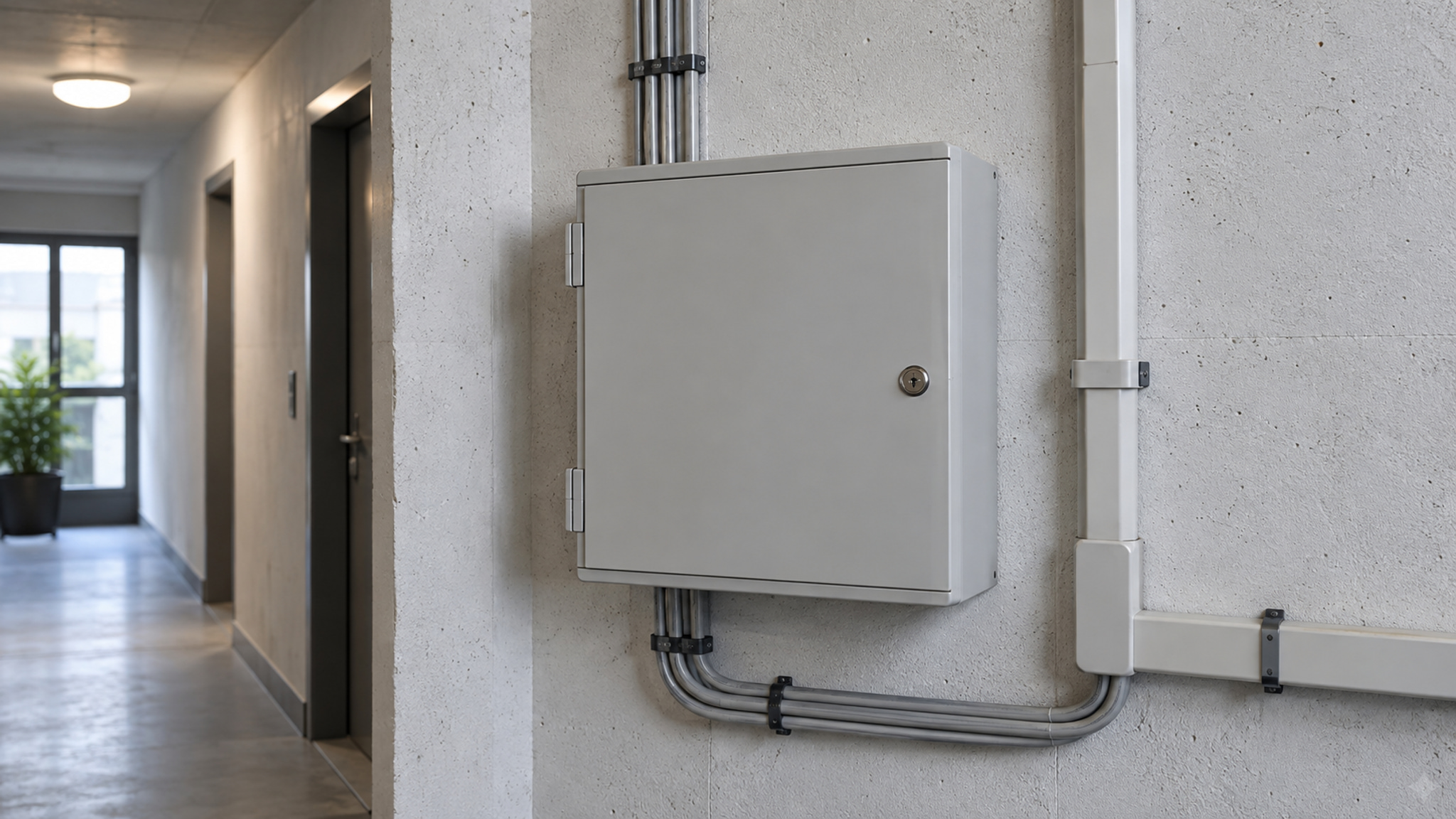
A residential development is handing over multiple apartment buildings and associated commercial spaces in phases, with a fiber-to-the-home network to be installed alongside construction. The operator needs clearly organized connections between building backbones, floor distribution points, and individual residences to support gradual occupancy and service activation.
The customer requires enclosure configurations that fit the available building space while retaining sufficient room for future port connections and fiber maintenance.
Challenges and Pain Points
1. Space conditions vary between buildings and floors, limiting where distribution boxes can be installed.
2. Phased service activation requires advance planning of port and fiber allocation.
3. Splicing, fiber storage, and patching share limited enclosure space, and poor organization can make maintenance more difficult.
4. Accurate fiber connection records must be transferred from the installation contractor to the operations and maintenance team.
GLGW Proposed Solution
Configure Distribution Points Around the Access Network Design
Determine distribution box locations, capacities, and connection arrangements based on the number of residences served, backbone fiber allocation, and the operator’s network design. Where optical splitting is required, select suitable splitters according to the network architecture and optical power budget.
Organize Internal Connections and Fiber Storage
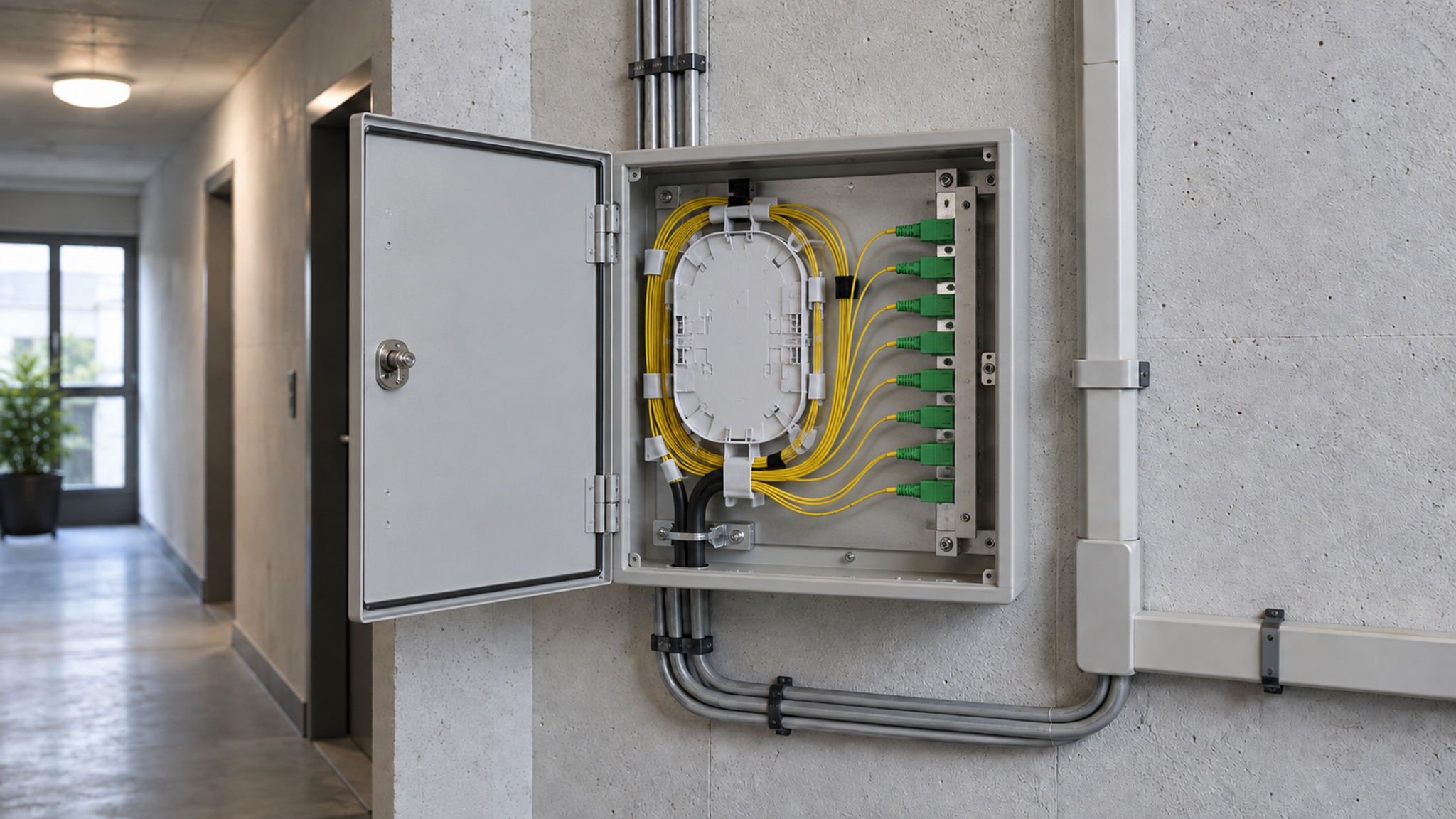
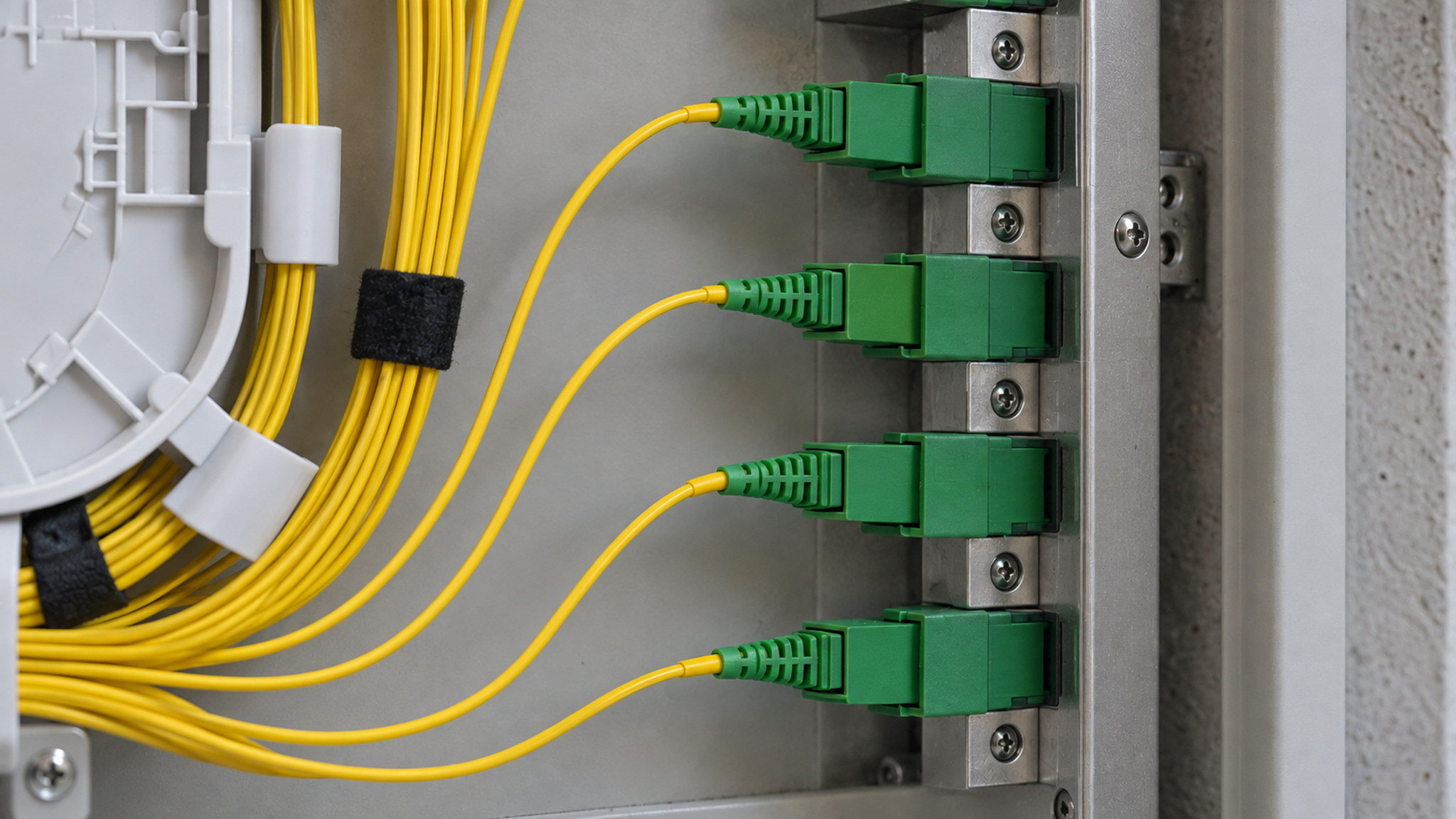
Organize internal fibers using splice trays, adapter mounting positions, and cable management features. Maintain the bend radius required by the selected fiber and allow sufficient working space for future service activation and maintenance.
Standardize Identification and Service Activation Records
Establish a traceable relationship from building and floor to enclosure, port, and residence. During handover, coordinate optical power measurements and link testing, and include port assignments, test results, and on-site labels in the project records.
Key Products and Components
Fiber distribution boxes, floor distribution enclosures, splice trays, adapters, pigtails, and fiber drop cables, together with PLC splitters and optical power meters as required by the project.
Expected Results and Value
Clear connections from the building backbone to each subscriber port support phased service activation and fault isolation. Appropriate capacity planning also allows room for additional subscribers and future maintenance.
Project Data to Add: Number of residences covered, number of enclosures installed, service activation time, optical power test results, and completeness of port records.