Fiber Splice Closure: 5 Key Benefits for FTTH & Backbone Networks

All Categories
Reliable Protection for Fiber Splicing

Reliable Protection for Fiber Splicing

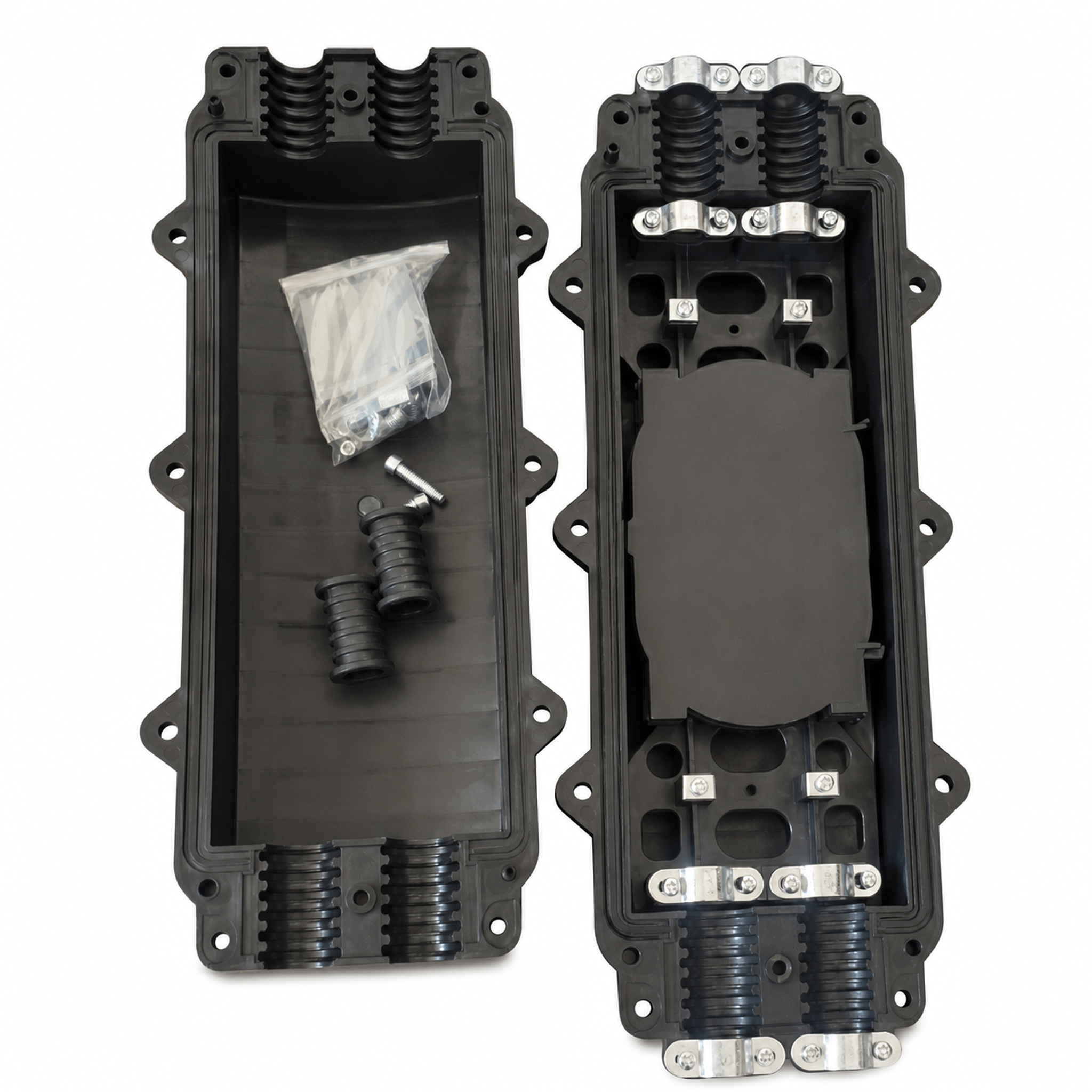
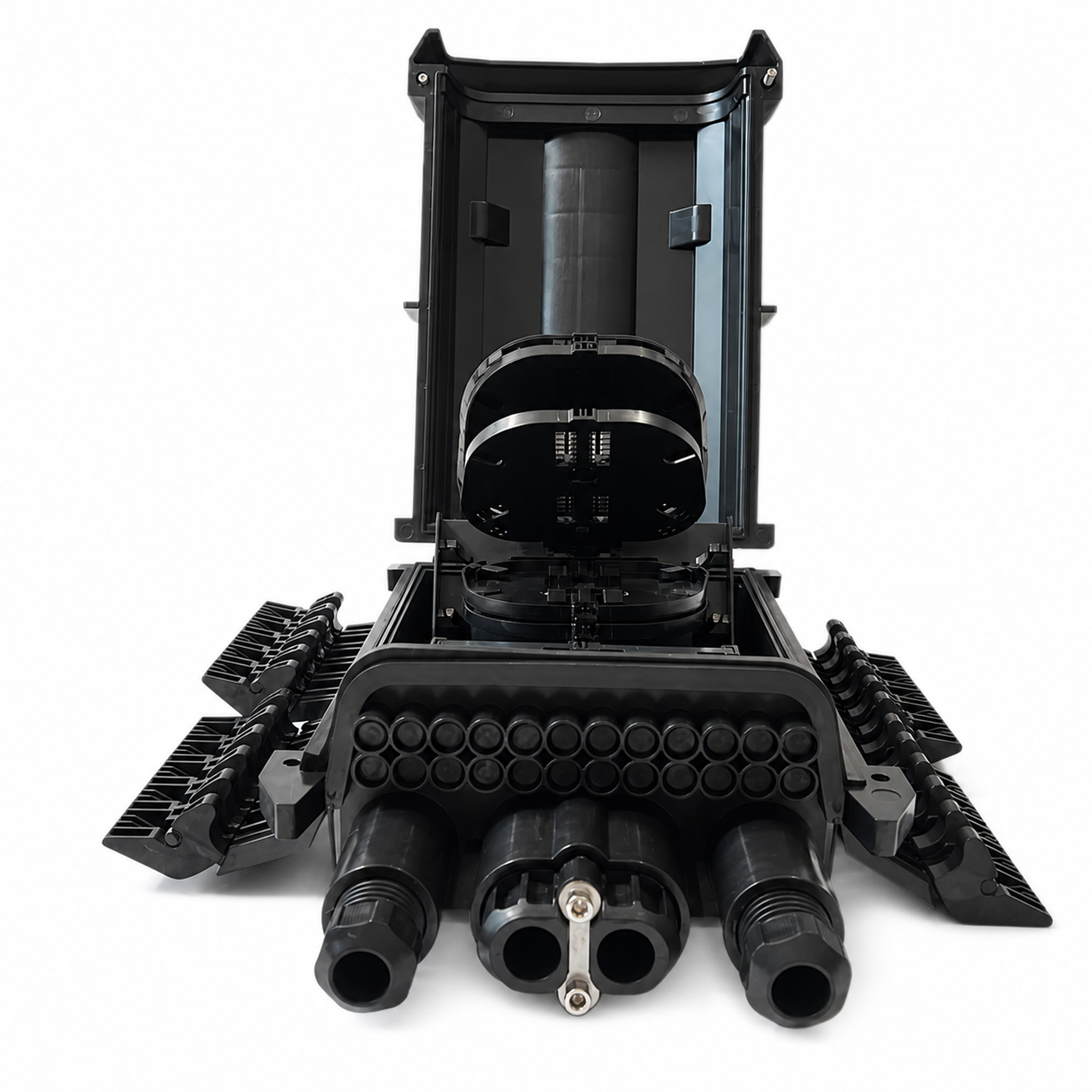
A fiber splice closure provides a protected space for joining, routing, and managing optical fibers in telecommunications and broadband networks. It helps organize splice trays, fiber loops, and cable entry points while reducing exposure to moisture, dust, mechanical stress, and other outdoor conditions. The closure can be planned according to fiber count, cable diameter, splice capacity, and installation method. Applications include FTTH, FTTx, broadband access, metropolitan networks, utility communication, and backbone infrastructure. Its structured internal layout allows technicians to identify individual splice connections more efficiently during installation, testing, and maintenance. For expanding networks, additional working space can be considered to support future fiber connections. This makes fiber splice closures practical for both new deployments and network upgrades.
Get A Quote

Case Study

FTTH Access Deployment

An FTTH contractor needed organized splice points for a residential broadband expansion involving multiple feeder and distribution cables. Fiber splice closures were installed at selected outdoor locations to create protected connection points for fiber routing and splicing. The project team planned each configuration according to fiber count, cable diameter, and expected subscriber growth. Splice trays kept individual connections separated and made service work more manageable for technicians. The structured enclosure also reduced unnecessary handling of surrounding fibers during testing and repairs. This approach is suitable for phased FTTH deployments where connection points need to remain accessible while supporting additional fiber installations as network coverage expands.

Underground Fiber Network

A metropolitan communication project required protected splice locations along underground fiber routes connecting several distribution areas. Fiber splice closures provided enclosed spaces for arranging splice trays, fiber loops, and cable entries below ground. The installation plan considered cable dimensions, splice requirements, and maintenance access before deployment. Sealing and cable management arrangements helped keep the internal splice area protected from surrounding conditions. Technicians could access specific splice sections without unnecessarily disturbing other connections. The solution is suitable for municipal broadband, utility communication, and metropolitan fiber infrastructure where cables are routed underground and reliable access to protected splice points is required for long-term network maintenance.

Outdoor Backbone Connection

A regional network operator needed organized splice points along an outdoor backbone route connecting several fiber distribution locations. Fiber splice closures were positioned at selected cable junctions to protect connections and maintain structured fiber routing. The project team evaluated the number of fibers, cable diameter, splice quantity, and available maintenance space before installation. Fiber loops were arranged to reduce unnecessary bending and simplify future service work. Technicians could inspect individual splice areas without disturbing unrelated connections within the enclosure. This type of configuration can support metropolitan and backbone networks where multiple optical cables meet and future maintenance access is important for maintaining an organized fiber infrastructure.

Related products

A fiber splice closure is designed to provide a protected and organized environment for optical fiber splicing where cables are joined along a network route. It typically provides dedicated space for splice trays, fiber loops, cable entry points, and sealing components, helping technicians maintain controlled fiber routing during installation and service. Depending on project requirements, the closure can be used in aerial, underground, direct-buried, or outdoor applications. Common deployments include FTTH, FTTx, broadband access, metropolitan communication, utility networks, and backbone infrastructure. Selection should consider fiber count, cable diameter, splice capacity, installation environment, mounting method, and maintenance space. A properly planned enclosure makes individual splice connections easier to locate and service while reducing unnecessary fiber handling. For network expansion projects, additional working capacity can also be considered so new fiber connections can be accommodated without major changes to existing cable routes.

Frequently Asked Questions

What is a fiber splice closure used for?

A fiber splice closure protects and organizes optical fiber splices where cables are joined. It provides space for splice trays, fiber loops, cable entries, and related components while helping shield connections from environmental exposure and mechanical stress.
Fiber splice closures can be used in aerial, underground, direct-buried, and outdoor fiber installations. They are commonly applied in FTTH, FTTx, broadband, metropolitan, utility, and backbone networks where protected fiber splicing is required.
Important factors include fiber count, cable diameter, splice capacity, installation method, environmental conditions, mounting requirements, and available maintenance space. Future network expansion should also be considered when determining the appropriate internal capacity and configuration.
Yes. Fiber splice closures can be configured for various outdoor network environments, including aerial and underground installations. Cable entry and sealing arrangements help provide a protected space for fiber splices and organized cable management.
Yes. They can be used at selected FTTH connection points to organize feeder, distribution, and branch fiber splices. Proper configuration helps technicians maintain accessible splice locations for testing, repairs, and future network expansion.

Related article

Intelligent Cabling Solutions for Future Networks

21

May

Intelligent Cabling Solutions for Future Networks

View More
How to lay bulk cable along pipelines safely?

21

Jul

How to lay bulk cable along pipelines safely?

Real World Field Experiences with Industrial Co Location Routing During an extensive industrial network expansion across a remote coastal oil terminal three summers ago, my installation team faced a massive challenge with electromagnetic interferen...
View More
Fiber Cable Tensile Strength for Aerial Installation.

24

Aug

Fiber Cable Tensile Strength for Aerial Installation.

Deploying optical fiber cables in aerial spans across long distances—such as utility poles over valleys, mountain ridges, and expansive rural infrastructure—exposes the cable assembly to continuous mechanical, gravitational, and environ...
View More
High durability patch cord for industrial network systems.

07

Sep

High durability patch cord for industrial network systems.

Industrial Patch Cord Explained: Construction, Durability, and Selection Guide for Harsh Environments What Is an Industrial Patch Cord and Why Is It Different from Standard Network Cables? An industrial patch cord is a specially designed Ethernet c...
View More

Customer Testimonials

Andrew Wilson

“The fiber splice closure helped our team organize several splice connections in a compact working area. The structured layout made installation and routine maintenance easier during our broadband deployment.”

Thomas Clark

“We used the closure for an outdoor fiber project and found the internal cable organization practical. Technicians could reach individual splice areas without disturbing the surrounding connections.”

Get a Free Quote

Our representative will contact you soon.
Email
Mobile/WhatsApp
Name
Company Name
Message
0/1000
Organized Splice Management

Organized Splice Management

A fiber splice closure provides a dedicated location for organizing splice trays, fiber loops, cable entries, and optical connections. A structured internal layout helps technicians identify individual splice points during installation, testing, troubleshooting, and maintenance. Controlled fiber routing also reduces unnecessary movement when service work is performed on nearby connections. The enclosure can be planned according to fiber count, splice quantity, cable diameter, and available working space. This is particularly useful when several feeder and distribution cables converge at the same location. By maintaining orderly fiber management inside the closure, network operators can create cleaner connection points and make future maintenance activities more efficient.
Protection for Outdoor Fiber

Protection for Outdoor Fiber

Fiber splice closures are suitable for applications where optical connections require protection from surrounding environmental conditions. Depending on the network design, they can be deployed along aerial routes, underground cable systems, direct-buried infrastructure, and other outdoor communication paths. Sealing and cable entry arrangements help maintain a protected internal environment around the splice area. The closure can therefore support FTTH, FTTx, broadband, metropolitan, utility, and backbone applications. Project teams should consider installation conditions, cable dimensions, splice capacity, and maintenance requirements when planning the configuration. Properly protected splice points can help technicians maintain organized connections while providing controlled access for inspection, testing, and repairs.
Scalable Network Configuration

Scalable Network Configuration

Fiber networks often expand as new subscribers, buildings, distribution routes, and backbone connections are added. A fiber splice closure can be planned around current splice requirements while allowing additional working space for future connections. Fiber count, cable diameter, splice tray arrangement, and cable entry requirements can all be considered during project planning. This approach helps reduce disruption when network capacity needs to increase later. It is especially useful for phased FTTH and broadband projects where installation occurs in multiple stages. By maintaining organized routing and practical working space inside the enclosure, network teams can manage existing connections more efficiently while preparing selected splice locations for future fiber deployment.

Get a Free Quote

Our representative will contact you soon.
Email
Mobile/WhatsApp
Name
Company Name
Message
0/1000